…Next, Simply Prepare Your Eels

So how do you kill and prepare an eel? Well, if you look in English Food, Griggers just says to ask your fishmonger to do the dirty work. The was not to be the case for me, for two main reasons: my fishmonger (and pretty much any fishmonger in the country, I hasten to add) had never dealt with them at all. Remember: fishmongers do not receive live fish, apart from the odd lobster or crab perhaps, so this was just as out of his comfort zone as mine. The second reason was that I felt it part of my duty as a meat-eater to do this. Every animal we have eaten has had to be killed. These days, however, the consumer hardly ever does this themselves. We are too far removed from our food these days and therefore disrespectful of it so some degree. This is a way of addressing this issue for me. I did not expect to find it easy. In fact I was very nervous; I had never killed anything in my life and I was not looking forward to it. I didn’t want it to be easy; I wanted it to be distressing (for me, not the eels). We take all this animal killing in our stride.
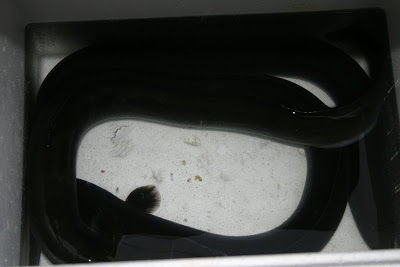
The eels await their fate in their little polystyrene prison

I have gone off on a tangent. Larousse Gastronomique gives you these instructions on how to prepare an eel. It sounded all so easy:

To kill an eel, simply seize it with a cloth and simply bang its head violently against a hard surface. To skin it, simply put a noose around the base and hang it up. Simply slit the skin in a circle just beneath the noose. Simply pull away a small portion of the skin, turn it back, take hold of it with a cloth and simply pull it down hard.

I added the “simply”s. Well it didn’t quite go like the description in Larousse. So here’s what we ended up doing:

First up, you need to have a couple of rums to help prepare you. That’s what Paul and I did and I think it helped. We fannied around a bit before Charlotte walked in from work, grabbed one in a cloth and gave it several massive thwacks again the wall. Job a good one? No. It was still alive! She gave it another couple and it went limp. This was not like killing a trout with a short, sharp crack on a stone. We felt quite distressed about the several hits that we had to give it to kill it – we didn’t want to cause any unnecessary suffering. So the new plan was to hit it once to knock the others out or slow them down, and then chop the heads off with a meat-cleaver. I know this might sound extreme but, it seemed like the best thing – plus I remember it being the method I remember seeing some chef doing on telly once. We did it, and guess what? They were still moving about! I took the two now headless eels to the, plus Charlotte’s to the skin to rinse, and revived Charlotte’s. Off with its head.

Before you get angry about any mistreatment here – it turns out that they were all dead quite early on. We worked this out because all three eel bodies were still seemingly happily snaking around in the sink a good 45 minutes post-beheading. It seems that much of their behaviour is down to instinct and their autonomic nervous system. Though I’ve no idea how this happens and why it’s so different to other fishes. Below is the rather gruesome video of the headless eels I took when they were in the sink. I mentioned the whole episode to Matthew Cobb (who I work with at Manchester University) who said he’ll put a link to this post on his z-letter. (FYI: The z-letter is weekly newsletter about all things zoological.) Hopefully I shall find out why they just don’t conk out. Be warned before clicking on the video if you are squeamish, remember too though that they are dead. Also, I apologise for my rather camp commentary. Let me know if you can tell me anything about eels and their habit of moving and swimming long after death.

The next stage of preparation is to skin them. In our panic, thinking we hadn’t killed eels when we had, we cut off the heads so couldn’t do the noose trick outlined in Larousse. Instead, we tried to make slit down the base and peel the skin away some other way. Anthea had arrived by this point, to find us sweating, giggling and holding bloody carving knives, and she suggested using some salt as it would give grip against their very slimy skins. At first all this seemed to do was kick-start the wriggle reflex again, but eventually – with Anthea restraining the wriggling eel with yet more cloths – I managed to get a purchase on the eel and pull the skin off in one piece. Just two more to go.

The hard work was done, just the gutting to do. At last I was on familiar territory. I’ve gutted fish several times before. To do this, make a cut from its anus – you’ll see it, about halfway down – to the neck end and pull away any innards away from the rib cage. Give it a rinse and you are done.

Well I have to say it was a pretty distressing episode, it wasn’t as bad as we thought at the time. I now know that eels carry on a-moving quite a while after death. So, to sum up:

1. Holding a cloth, hit your eel several times very hard against a wall.
2. Whilst the eel is limp, quickly cut off its head with a cleaver or very sharp knife.
3. Using salt as an abrasive, pull the skin back – persevere here – until you have a good inch of skin eked away, then pull off like a big macabre witch stocking.
4. Gut and wash the eel.

It sounds so easy put into four sentences.
#192 Elizabeth David’s Prawn Paste

In days of yore, we English loved potted meats and fish. You don’t seem to see many potted foodstuffs around these days: though potted beef is still popular in Yorkshire. Pate does not count. This one at first sight seems a bit weird, and perhaps foul, but there are some interesting ingredients in there. One of the great things that Elizabeth David did in the sixties and seventies was introducing us to Mediterranean flavours, and she managed to sneak a few in here: olive oil instead of butter, basil instead of parsley, lime rather than lemon. She transformed our eating habits; along with Grigson, Floyd, et al. of course. It may seem odd these days – all those continental ingredients mashed up in a now-defunct method of preparing meat and fish – but there you go.

Place eight ounces of cooked, peeled prawns in a blender along with the juice of a lime and around six tablespoons of olive oil – use extra virgin if you have it since as it’s not going to be cooked. Blend until smooth and add half a teaspoon of dried basil and a heaped saltspoon (!) of crushed coriander seeds. Season with a little salt and some Cayenne pepper. Divide between some small ramekins, cover and refrigerate. Serve with hot, thin toast.

By the way, I don’t know the capacity of a saltspoon as I don’t own one, so don’t ask me. Actually, I’d not even heard of one. I guessed and added a quarter of a teaspoon. Also, don’t buy dried basil, as it has no flavour; dry your own in a cool oven for about 20 minutes until crumbly: much better.


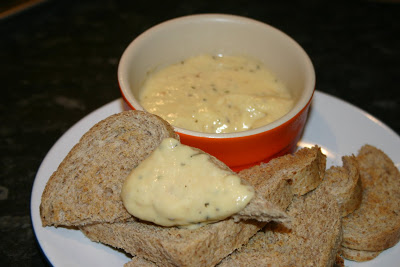
#192 Elizabeth David’s Prawn Paste. It may have sounded like horrible soggy fish pap, but this was delicious. The prawns were sweet, the olive oil was fruity and the basil and coriander seeds combined with the lime juice provided a morish tang. Really good – go and make some. 7.5/10.

#184 Kedgeree

The thrifty cooking is going well – Charlotte and I having been very shrewd. However, when it comes to Sunday dinnertime, I did want a nice big hearty (and pricey) roast. Instead I went for kedgeree. I don’t recall ever having eaten it before, even though I knew exactly what is required to make it. I had high hopes for it: curry, eggs and Finnan (smoked) haddock. What can’t be good about that!? It used to be a breakfast dish, but these days it’s eaten for dinner or tea.

I have been researching the origins of kedgeree, and there seems to be two differing stories: the Scots reckon that it hails from there, and when the lovely British Empire decided to pop over to Asia and add India to its collection, the Scots brought it over too and the curry element was added. The alternative story is that the dish started in India, but then when colonialists came over, they added the smoked fish. I’m going with the latter story – the best evidence is the etymology of the word: kedgeri is the name of a similar Indian dish containing rice, lentils and eggs.

To make kedgeree, start off by poaching a pound of Finnan haddock in barely simmering water for ten minutes. You can use any good-flavoured cured fish, of course, for example kippers, smoked salmon or bloaters. Meanwhile chop a large onion and fry it in olive oil until it browns. Add a teaspoon of curry paste (I used Madras) and fry for a minute. Remove the fish from the water, remove its skin and flake the flesh, removing any bones. To the pan, stir in six ounces of long grain rice and when translucent add a pint of the poaching water. Cover the pan and let it simmer gently until all the water has been absorbed. Gently stir in the flaked fish along with a large knob of butter. Plate out the kedgeree and decorate with quartered hard-boiled eggs, prawns and chopped parsley. Serve with a lemon wedge and mango chutney.


#184 Kedgeree. This did not disappoint – the food was substantial and well-flavoured, but light. The combination of curry and eggs, and of smoked fish and eggs is great. Plus the extra addition of the lemon, prawns and mango chutney; not something I would normally associate with this dish really makes it special. This is a high-scorer – the only gripe (and it is a minor one) is the use of long grain rice, I am a Basmati man myself; it has a nutty flavour and doesn’t go as stodgy. 8/10.

#177 Hollandaise Sauce

The fishmonger in the Arndale Centre in Manchester was selling sea bass for £1.50 each! What a bargain. I know that they’ve probably been dredged up by one of those massive trawler nets and by buying them I’ve surely helped seal the fate of several marine species, but ignorance is bliss so I won’t try to find out.

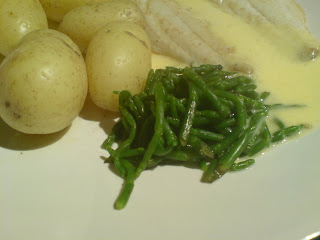
To go with the sea bass, I had samphire (see previous entry) and also made some hollandaise sauce. Not technically English, of course, but we’ve used it for so long in our cuisine it seems English – more English than, say mayonnaise anyway – and it is one of my favourite sauces. The trouble is, me and hollandaise has a chequered past; it’s a tricky sauce that is either amazing and delicious, or splits and is awful and goes in the bin. My success rate is around 50%. Griggers’ recipe is slightly different to the classic way of making it as it doesn’t use melted butter, but uses cubes of butter added gradually instead? Is this a foolproof recipe? We shall see…

FYI: hollandaise sauce first appeared as simply melted butter in eighteenth century France, but soon became the complex emulsion of butter and egg yolks we know and love and was added to the list of mother sauces of French cuisine by Escoffier in the early twentieth century (the others being béchamel, veloute, espangole and allemande).

This is the Griggers method (you can multiply up or down depending upon how much you need to make):

Begin by boiling down 3 tablespoons each of water and white wine vinegar and 10 crushed white peppercorns until just a tablespoon remains. Strain it into a bowl and allow to cool. Bring a pan of water to a simmer and place the bowl over it. Beat in three large egg yolks and beat in 6 ounces of unsalted butter bit by bit using a wire whisk. Do not over heat, or the eggs cook and the sauce splits. Season with salt and lemon juice.

#177 Hollandaise Sauce – 9/10. Well that was easy! This may be the fool-proof method I have been after (either that or it was a fluke). The sauce is beautifully rich, with a piquant tang of lemon and vinegar that cut through it so well that you easily drink a pit of the stuff. My only gripe is that this method doesn’t seem to make a very thick sauce, but that is being very nit-picky.

#176 Samphire

I came across some marsh samphire in the fishmongers the other week – I had been looking for it previously and thought I would have to go to extreme lengths to get hold of it – I bought it, just in case I never came across it again. Luckily, Griggers mentions in English Food that samphire can be successfully frozen by blanching briefly and then popping into the freezer.

Samphire grows on the salty soil near the sea, and marsh samphire grows in salt marshes. The word samphire is a corruption of the French Saint Pierre, the patron saint of fishermen. He was obviously looking after them by providing the coastal veg. Samphire comes/came under several names: sea asparagus, glasswort (it was used in glass production), crab grass and frog grass. Keep a look out for it when you are near the sea – rock samphire grows well on Dover cliffs, but collecting it is a precarious activity – ‘a dreadful trade’, according to Shakespeare in King Lear. Best stick to the marshes, if you want to try and collect your own.

Samphire is dealt with in two ways: pickling or boiling. Boiled samphire is generally served as a vegetable with fish or lamb or with a hollandaise sauce (which I did, along with some pan-fried sea bass). To do this, boil rapidly in unsalted water until tender, this should be just five minutes. Drain and serve.


#176 Samphire. 5/10. It seems that the blanching and freezing technique is not as successful as indicated by Griggers; they were unfortunately left all soggy and not at all crisp and tender. The flavour however, was good; salty and sweet with a mild taste of ocean ozone. I think that I shall try it again but without freezing it this time.

#169 Salmon Fishcakes

Now that I have decided that smoked salmon is not the work of Satan, I thought that I’d have a crack at some more salmon recipes. This is a good thing seeing as the freshwater fish section of the book is woefully under-represented. Still being a little tentative, I went for these fish cakes that do a great job of padding out some salmon fillets. They are a very old-fashioned style of fish cake – based on a very thick béchamel sauce, not what we are used to at all these days where we would expect chunky fish and potatoes. However, I’ve had the man flu coming on for a while and needed some comforting stodge.

This recipe makes eight to ten fishcakes, depending upon how big you like them.

Begin by poaching a pound of salmon in water that has been seasoned well with salt, pepper, white wine vinegar and some bay leaves. Also, mash 4 ounces of potatoes. Allow these to cool. Meanwhile, you can be making the béchamel sauce: melt 2 ounces of butter in a pan and stir in 3 ounces of plain flour. Cook for a few minutes before gradually stirring in ¾ pint of milk. The sauce will be very thick. Let it cool a little bit, then mash the salmon and stir in the sauce. Also mix in a tablespoon of dill and/or parsley, a squeeze of lemon juice and some salt and pepper. Beat in an egg and the mashed potatoes. Chill the mixture in the fridge and form into cakes; this is quite tricky as the mixture is soft. The best thing to do is to use a tablespoon to scoop out a large amount of it and place it in some prepared breadcrumbs and coat each one. You can place it in the fridge again if you like, but you don’t have to. Fry on a medium heat in a mixture of butter and oil for 4 minutes each side. I served it with lemon wedges and a green salad dressed with another recipe from the book: English salad sauce.

#169 Salmon Fishcakes. A tricky one to score. I enjoyed them – I even went back for seconds, but they were slightly too stodgy, even for me. However, the flavours were very good – not too fishy, nice and herby and delicious a piquant lemon taste. I would make them again, but with some modifications, I think – more potato, crushed rather than mashed; chunky fish rather than mashed…you get the idea. 5/10.

#168 Smoked Fish Souffle

This one is just a quickie: With the bit of smoked trout Butters and me had left over from our trip to the Cheshire Smokehouse, rather than just scoff it au naturelle, I made this smoked fish trout. The recipe is exactly the same as the cheese soufflé I did a wee while ago, the only difference is that the cheese is omitted from the mixture and flakes of up to 8 ounces of any smoked fish you like are folded in after the egg whites are incorporated. The soufflé is topped with a tablespoon each of Parmesan cheese and breadcrumbs for a good crunch.

#168 Smoked Fish Soufflé – I gave the cheese soufflé high marks and this was good – if not, better – so I reckon it’s a 9/10. This soufflé recipe is really good – the egg and smoked fish combination in this case really was sublime; the perfect way to use up any off-cuts or leftovers. Brilliant stuff.

P.S. No photo! My stupid camera takes pictures and then they aren’t there when I come to view them.

#166 Smoked Salmon

Butters and I went to the Cheshire Smokehouse at the weekend and bought lots of good things: smoked nuts, smoked trout, bacon and – amongst other lovely stuff – smoked salmon. You may be wondering why I’ve left such a simple thing out for so long – it is simply because I don’t like the stuff. It’s one of the problems with this whole plan; what do I do if I don’t like the ingredients? As it happens, I went to Glasgow on a conference earlier in the year and tried some there and it was, unbelievably, okay. So I thought that if I’m to do this I need to try really good salmon, not cheapo crap from a supermarket.

It’s perhaps I little bit of a cop-out citing this as a recipe, but I’m including it anyway. Jane makes a good point about smoked salmon that are worth reiterating and it applies to any food, really: always by the best quality, even if that means you buy less of it; I think that this is particularly applicable to any meat, fish or dairy product.

When you buy your smoked salmon arrange slices on a plate with brown bread and butter and some lemon juice. I added some capers and a little creamed horseradish, otherwise, that’s it. If you have a bought a side of salmon, use the trimmings for scrambled eggs or soufflés.


#166 Smoked Salmon – 7/10. After all these years, it turns out that smoked salmon is nice; I’ve just been eating the rubbish stuff! (Or I have expensive tastes.) It’s a simple concept – salmon, bread, butter and lemon juice, but that is really all you need. What have we learned: buy the best you can afford and do as little as possible to it to get the most out of it. Here endeth the lesson.

#162 Horseradish Sauce

To accompany the salt beef, I made this classic accompaniment, though it goes very well with smoked fish such as trout.

It’s very easy to make: lightly whip ¼ pint of double cream and stir in 2 tablespoons of grated horseradish, then season with salt, pepper and the juice of up to half a lemon. It’s important to just lightly whip the cream as the acids in the lemon make it much thicker. Griggers also make the point that the outside of the horseradish root is alot hotter than the centre, so if you like it milder, grate across the root, rather than down the side.

FYI: horseradish can be found growing wild in most places in Europe and has been cultivated by the Egyptians and Romans and, according to Greek Myth, Apollo was told by the Delphic Oracle that it was worth it’s weight in gold, though why I don’t know.

Again, no pic, sorry – my camera’s doing some funny things

#162 Horseradish Sauce – 6.5/10. This very pleasant and creamy, though lacked the punch I expected, even though I was pretty generous with the horseradish. It was ok, but I think I prefer a jar of proprietary horseradish sauce! Is this bad of me!?

#159 Creamed Roe Loaves

Here at Grigson Towers, we don’t like to let anything go to waste, and our tasty fishes are certainly something that should be at treated with a huge amount of respect. So do your bit by making your mackerel (or herring) go further by asking your friendly fishmonger to fish out the fishes’ roes when he guts them. After all you have paid for them anyway.

There’s quite a few roe recipes in English Food and I’ve tried them, so I thought I’d better get started. This one seemed straight-forward and is very similar (and cheaper!) to the oyster loaves recipe, so I was sort of on familiar ground. The good thing about this recipe is that you can reduce the amounts accordingly depending upon how many roes you have – in fact I only had enough to make one!

FYI: In case you didn’t know (and don’t let this put you off) the soft roe of a fish is the sperm, and therefore from a male fish. They’ve gone out of favour, with some fishmongers just throwing them away instead of selling them! Another thing we need to try and bring back, people!

Prepare 8 small rolls of bread just like for the oyster loaves. To make the filling, soften 3 shallots or 3 tablespoons of onion in butter over a low heat. Add ½ pint of double cream and cook until it thickens. Cut the roes into one centimetre cubes and place them in the cream and allow them to poach gently – this only takes a few minutes. Add parsley and chives and season with salt, black pepper and Cayenne pepper, plus a squeeze of lemon juice to cut through the creaminess. Spoon the mixture into the hollow loaves and serve immediately.

#159 Creamed Roe Loaves – 7.5/10. I really enjoyed my first foray into roe gastronomy, though a dated dish, you could modernise it easily by serving it on toast instead, or something. They are very soft and have a very delicate flavour. Try them, don’t fear the fish sperm – you’ll like the flavour and texture – and, after all, you’ll happily eat fish eggs (or bird eggs), so what’s the difference?