#245 Coconut Cream with Strawberry Sauce

This is a dessert that I had been looking forward to making for a while – I was just waiting for strawberry season. What could possibly not be delicious about strawberries, coconuts and cream?? Griggers doesn’t say anything about where it comes from; whether it was modern at the time of writing or if it has a good stoic history in the annals of English cookery. Scroll down to the picture, though, and you have to assume it’s probably from the Fanny Craddock School rather than the Alexis Soyer School.

It’s a little bit of a faff this one and the coconut cream needs to be made well in advance because it contains gelatine and that needs to set. To make it, bring ¼ pint of single and soured cream slowly to a boil along with a split vanilla pod and 4 ounces of desiccated coconut and 7 fluid ounces of water. Let the mixture simmer for 10 minutes and let it cool down until ‘tepid’. Pass through a sieve and add either powdered or leaf gelatine dissolved in 6 tablespoons of water; follow the instructions in the packet and make enough for a pint of liquid in total. Also add a good tablespoon of grated creamed coconut and add sugar and lime juice to taste. Griggers says: “the citrus juice is an enhancer, it should not be identifiable”. Pop the cream in the fridge and allow to cool and reach an ‘egg white consistency’. At this point, fold in ½ pint of whipping cream that had been whipped stiffly. Pour the whole mixture into a lightly-oiled decorative jelly mould and allow to set. To turn it out, dip the mould in hot water briefly before upturning it.
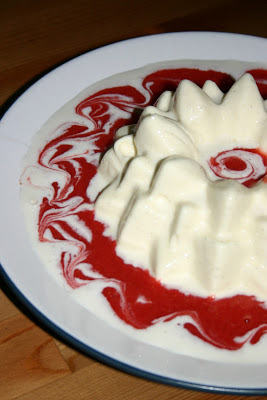
The strawberry sauce is much easier. Hull a pound of strawberries, keeping the nicest ones behind for decoration, and liquidise the rest with the addition of some icing sugar to sweeten. Pour the sauce around the coconut cream and “dispose of the strawberry halves in a decorative manner”. Or else.

#245 Coconut Cream with Strawberry Sauce. Oh, I had looked forward to this one for so long; I should have learned by now that some of these desserts are just plain rubbish. And this one definitely fits into that category. The coconut cream was pretty tasteless bearing in mind the number of what should be delicious ingredients that made it up. Next time, strawberries and cream will be served. 3/10.

#244 Grasmere Gingerbread II

Ah, the Lake District. Hugh and I were not far from Grasmere only last weekend on a little break so I thought I’d make the second of the Grasmere Gingerbreads. You can just imagine William Wordsworth tucking into these after his daffodil sandwiches of an afternoon or whatever. It’s what we would have done if it HADN’T PISSED IT DOWN all weekend. Hey-ho.

This is a bit different to Grasmere Gingerbread I in that it is made with wholemeal flour. Usually wholemeal flour based biscuits and cakes are found in the vegan health food shop and taste awful, but don’t let that put you off; these are delicious and easy to make too:

Start by sieving 8 ounces of flour along with ½ teaspoon each of cream of tartar and bicarbonate of soda and 3 decent teaspoons of dried ground ginger (don’t be scanty, it can take it). Rub in 6 ounces of butter and then mix in 5 ounces of soft dark brown sugar and a dessertspoon of golden syrup. You should end up with a dark rubble. Line a roasting tin or oblong pan with greaseproof paper and pour the mixture in, pressing it down firmly. Bake for 45 minutes at 160⁰C. Remove and cut into rectangles whilst still hot and cool on a rack.


#244 Grasmere Gingerbread II. Really good this one. The wholemeal flour and treacly taste combine well here to make a rich crumbly, though very slightly chewy bittersweet biscuit. I shall definitely be making these again. I reckon if crushed, they would make a very good crumble topping. Tres bon. 7/10

Oh, he’s back is he?

Hello there Grigsoners! No, I hadn’t died and I certainly hadn’t forgotten about the blog. I have now completed my PhD thesis and have somehow made it through the other side alive. Phew! It was a close one.

Well it is back to the cookery blog now as though nothing happened – I’m going to try and concentrate on making good use of the summer fruits as well as trying my best to empty my fridge which is bulging at its seal with food goodies.

I have some news too that may please some of you. I have just got a new job in a research laboratory at Rice University in Houston, Texas!! I start at the beginning of September so will be there by August! After a year, I then go on to Washington University in St Louis, Missouri! This means that Neil Cooks Grigson is going Stateside! I’m not sure how much of it will be possible to do over there, but I will try my best. I’ll need help from all you Yankees that read my blog!

#243 Spiced Welsh Mutton ‘Ham’

Well hello there! No I haven’t died on you or anything. I’ve just been uber-busy with my thesis writing and hardly had time to do any Grigson-related cookery. Here’s is one that I actually did a couple of weeks ago but haven’t been able to tell you about.

The cured meats from the book have all been pretty successful and this one sounded nice and easy, plus would keep me in butties for the foreseeable future. I wasn’t sure how it was going to turn out because we don’t really cure lamb to make ‘ham’ do we? Unless I’ve been missing something all these years.

Anyway, here’s how to make to your spiced lamb ‘ham’:

First of all select your leg of lamb or mutton – you need one that weights about 6 pounds. Place it in a large pot or tub that has a well-fitting lid and rub it all over in a spiced salt mixture for curing. To make the spiced salt, mix together 4 ounces of dark brown sugar, 8 ounces of sea salt, ½ ounces of saltpetre, an ounce each of crushed black peppercorns and allspice berries, plus a heaped teaspoon of coriander seeds. Make sure you rub it in well, ensuring you get down between meat and bone. Keep it in the tub in a cool place and turn it over every day, rubbing in the juices and spices for 14 days.

Then, rinse any excess spices away from the surface of the leg and place in a large pot and cover with water. Bing slowly to a simmer and cook as gently as possible with the lid on for 3 ½ hours. Let the lamb cool in the water for a couple of hours, remove it and, wrap it in clingfilm or greaseproof paper and let it finish cooling under a weight. It keeps in the fridge for ages as long it is wrapped up or kept in Tupperware. Griggers says that if you have a smokehouse nearby that will let you put the cured but uncooked leg in, then do so! I haven’t, so I didn’t!


#243 Spiced Welsh Mutton ‘Ham’. This was a revelation! I do not know why we don’t cure mutton and lamb anymore. Absolutely delicious. The lamb meat was succulent and flaky just like corned beef and the spices cut through the richness of the fat. Best cured meat so far. 8.5/10

#242 Cacen Gri (Griddle Cakes)

It’s been a while Grigsoners. I am very busy at the moment – and will be for the next couple of months – writing my PhD thesis, so forgive me if the blog entries become a wee bit thin on the ground. The recipes that I can do are those that don’t require difficult-to-get items or dinner parties so I’m a little limited seeing as I spend most of my time in a library these days.

Anyway, enough of that.

These Welsh griddle (or girdle) cakes seemed by the recipe that they would be absolutely delicious. Indeed girdle cakes must be delicious because there’s a few recipes in the book. However, the last time I cooked some (Singin’ Hinnies) they were pretty awful. Grigson doesn’t give any background on Cacen Gri, though I have noticed that there are lots of Welsh recipes – perhaps more than English ones – in the part of the book devoted to griddle cakes and pancakes. Funny that, because when I think of Welsh specialities, I think of leek pie and rarebits not pancakes. They must be terribly fat as the amount of butter and lard in this is huge!

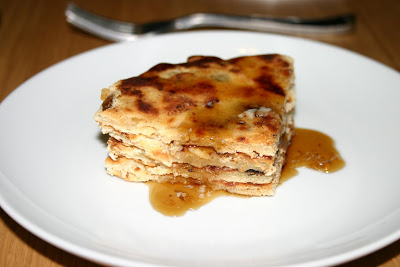
Start off by sieving a pound of flour and a teaspoon each of baking powder and salt into a bowl. Rub in four ounces each of cubed butter and lard. Mix in three ounces of mixed dried fruit and peel and an egg plus a little milk to form a dough. Leave to rest in the fridge for a little while and then roll out thinly and cut into plate-sized rounds. Grease a large pan with a little lard fry the griddle cakes for just two minutes a side on quite a high heat. Don’t overcook them as they go very dry very quickly. They should puff up a little and gain brown spots. Stack them on a warmed plate, add a good knob of butter between each one, keeping them nice and cosy in a warm oven. I served them with some very un-Welsh maple syrup too.


#242 Cacen Gri (Griddle Cakes). I wasn’t sure if I liked these or not. The first batch was over-cooked and all powdery. I soldiered on a tried again though and I think that they were okay. No more than that though. They were still pretty claggy and need lots of butter and syrup. Perhaps that is the secret to these girdle cakes – any amount of flour and fat will taste fine if smothered in enough melted butter and syrup. 5/10.

#241 Venison (or Game) Pie or Pasty

It’s pretty much the end of the game season now and so to see it off for another year, I thought a delicious venison pie was in order. I love venison, but for some reason have never cooked with it so I thought a pie would be the place to start. It’s a nice easy pie to make and the filling can be made well ahead of time. The really good thing about it was specific instruction of producing some ornate pastry work for the top. I don’t know why the name of the recipe is a pie or pasty, because there’s no instruction for making this into a pasty.

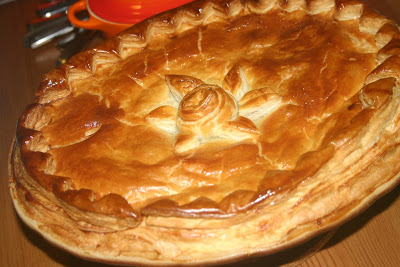
Start off by turning some pieces of shoulder venison or game in flour that has been seasoned with salt, pepper and mace. You’ll need three pounds of venison for other game for this. Brown the venison in two ounces of butter in a cast-iron casserole. Now add 4 ounces of chopped onion, ¼ pint of red wine plus enough beef or game stock to cover the meat. Bring to a simmer and cook gently until done, says Griggers. This might not be useful for those – like me – that have never cooked venison; I placed it in an oven heated to 150⁰C for two hours. In the case of game on the bone, it is cooked when you can take the meat easily from the bone. Melt two more ounces of butter in a saucepan and add a tablespoon of flour and cook to form a roux, strain some of the sauce into the pan and simmer for five minutes before mixing it back into the pie filling mixture. Check for seasoning. Pour the mixture into a pie dish and cover with puff pastry. Make a hole in the centre surrounded with a pastry rose plus some other nice ornate patterns, as is traditional, using egg to glue any bits on. Lastly brush to whole thing with more egg to make a nice glaze. Delicious hot or cold, says Jane.


#241 Venison Pie. This was a great pie! The meat was deliciously tender and gamey and the gravy dark and rich; a pie to warm your cockles. However, it was not delicious cold as the gravy was all congealed and it was a bit like dog food. Doing the pastry was great fun too (if you are a massive geek, like me) 7.5/10.

#240 Smoked Sprats (and #232 Pickled Eggs revisited)

‘An inexpensive luxury’, says Jane Grigson of smoked sprats. That sentence should be now changed to: ‘An expensive luxury’. How times have changed. I’m not sure why smoked sprats aren’t more widely available because fresh sprats certainly are, so it’s not like they are hard to come by. The only place I’ve seen them is The Fish Society’s website. You eat smoked sprats whole, rather like whitebait, the difference of course, is that they are quite a lot bigger than tiny whitebait.

Anyways, my friends Simon and Rachel came over to visit after their super-amazing trip around South America. They blogged it, natch, have a look-see at it here. I thought smoked sprats would make a great starter. Because my friend Stuart – a staunch vegetarian – came along too so I served some pickled eggs, remember them? Have a look here to see they were made.

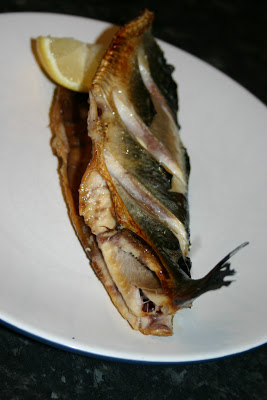
To cook the sprats, simply grill them and serve them with lemon wedges and brown bread and butter. To eat them, pull off their heads and tails and eat. If that seems a little too much, you can remove the fillets from each side with your thumb.


#240 Smoked Sprats. I really liked these alot. The problem of bones/guts was, in the end, a non-issue. The bones were just the right side of not being too crunchy or sharp. They were quite strongly smoked, but also sweet in flavour and not over-powering like some cured fishes can be. If you see some, be sure to give them a go. 8.5/10

#232 Pickled Eggs. These were also very good – they required a little wait for the viengar to work its pickling magic, but were worth it. If you’ve had vile pub pickled eggs, don’t be put off by these. the white wine vinegar made them very subltly sharp and the chillies in the pickling liquor lent a decent spicy-punch to them. 7/10.

#239 Rice Bread

Baking is the best form of procrastination because at least you have something to show for it other than a lack of what you should have been doing. I chose this bread simply because I had all the ingredients in. Although it is a rice-based bread, don’t be getting it confused with the awful rice cake I made last year. This recipe is another from Elizabeth David’s tome English Bread and Yeast Cookery, and was very popular with one Lady Llanover who said rice bread is the best for sandwiches. It has gone out of favour since the nineteenth century, let see if it worth bringing back…

First cook three ounces of long-grain rice in double its volume of water in a covered pan. Let it simmer and don’t take the lid off until all the water has been absorbed. Meanwhile, cream half an ounce of fresh yeast in a little water. The recipe calls for quite a lot of salt: between a half and three-quarters of an ounce of it! I measured a shy half an ounce. Dissolve the salt in a quarter pint of water from the kettle and add to it a further 8 fluid ounces of cold water. Place 18 ounces of strong plain flour in a mixing bowl, make a well in the centre and add the creamed yeast and warm salty water. Mix to form a soft dough with your hands, adding more water of flour if appropriate. Cover and leave to rise in a warm place: you know the drill.


Knock back the risen dough and briefly knead, either by hand or with a dough hook, then place in a large greased bread tin that has a three to three-and-a-half pint capacity. Cover once more and allow to prove until it has risen up to the top of the tin. Place in an oven preheated to 230⁰C for 15 minutes and then lower the heat to 200⁰C for a further 15 minutes. Remove the loaf from the tin, invert it, and then place it back in the oven for a final five minutes so that the crust can crisp up.

#239 Rice Bread. A lovely pale, fluffy and slightly spongy bread that was indeed great for sandwiches. I polished most of it off with fried bacon and rocket with mayonnaise. Definitely the best of the plain breads so far, and definitely one of the easiest. I wouldn’t put more than a quarter of an ounce of salt in though as any more and it could have been horrid. 8/10

#238 Grilled Bloaters

For all you heathens out there today is Good Friday. Which, of course, means that Jesus got killed or some such other scrape. I am obviously in the heathen camp. Anyway, the point of all this is one should eat fish on Good Friday. I assume this is because we are at the end of the 40-day fast we have all been on and fish was always allowed on fast days. These rules were bent rather a lot in days of yore: ducks, geese and beaver were all added to the list. So as it is Good Friday, here’s a fish recipe with some of the fish I had delivered from The Fish Society.

Bloaters are cured herrings, like kippers, only the cure is much more subtle. They are also gamier because they are cured whole and ungutted, causing them to bloat as they hot cure in the smokehouse. I’ve never had bloaters before, and was looking forward to trying them. This recipe seemed to most appropriate to begin with as I would get to taste pure unadulterated bloater.

The bloater before prep

Start by getting your grill very hot. Whilst you are waiting for it to hot up, gut the bloater by cutting down its belly, this is not a horrible experience as they are quite dry. If there are any roes Griggers says to keep them for another dish. Now cut the head off and make slashes down both flanks of the fish and spread over with softened butter. Now simply grill for three minutes per side so that the skins go all bubbly and crispy. Serve immediately with brown bread and butter and a lemon wedge.


#238 Grilled Bloaters. These were very nice indeed. The cure as expected was much more subtle and less salty than kippers, which meant you could eat more; always a good thing in my book. They are also much less fishy and pungent, so I am surprised that they have gone out of favour somewhat as they are much less of an acquired taste than kippers. Anywho, if you have never tried them (and few have) this is definitely the best place to start. 7/10

April Food

Hello there! It is April and that means real spring is here. Anybody in Scotland or Northern Ireland, of course, will be most bemused by that last sentence. Real spring means that there is plenty of wild food beginning to pop out, though cultivated fruit and vegetables are still a bit thin on the ground. It’s also the end of the game season – there’s really just rabbit and wood pigeon around, though some places have extended the game season for venison.

This month I’m going to try and concentrate on the Fish chapter – I have recently discovered an excellent company called The Fish Society. They sell all the fishy things you’d expect, plus some things that are hard to get hold of. I have made full use of this and received a big order of bloaters, smoked sprats, pike and smoked cod’s roe amongst other things. This is not to say that I have stopped going to Out of the Blue, my favourite fishmonger’s shop, it’s just that some things are not in demand.

Anyways, here’s the list of seasonal foods for April:

Vegetables: broccoli, cabbages, cauliflower, spring and winter greens, lettuce, radishes, sea kale, sorrel, watercress.

Fruit: rhubarb.

Wild greens and herbs: alexanders, chickweed, chives, cow parsley (wild chervil), dandelions, fat hen, hogwood shoots, hop shoots, meadowsweet leaves, nettles, sea kale, sea spinach, sorrel, watercress, wild garlic, wild rocket.

Wild flowers and fruits: primroses

Fungi, nuts and saps: morels, St. George’s mushroom

Fish and shellfish: cockles, crab, oysters, pollack, salmon, sea trout

Game: woodpigeon, rabbit, venison.