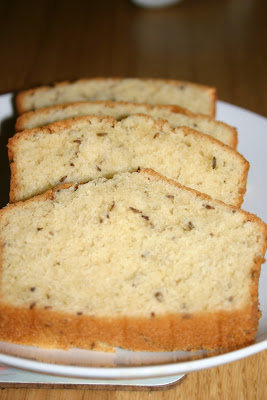
#267 Nut Cake

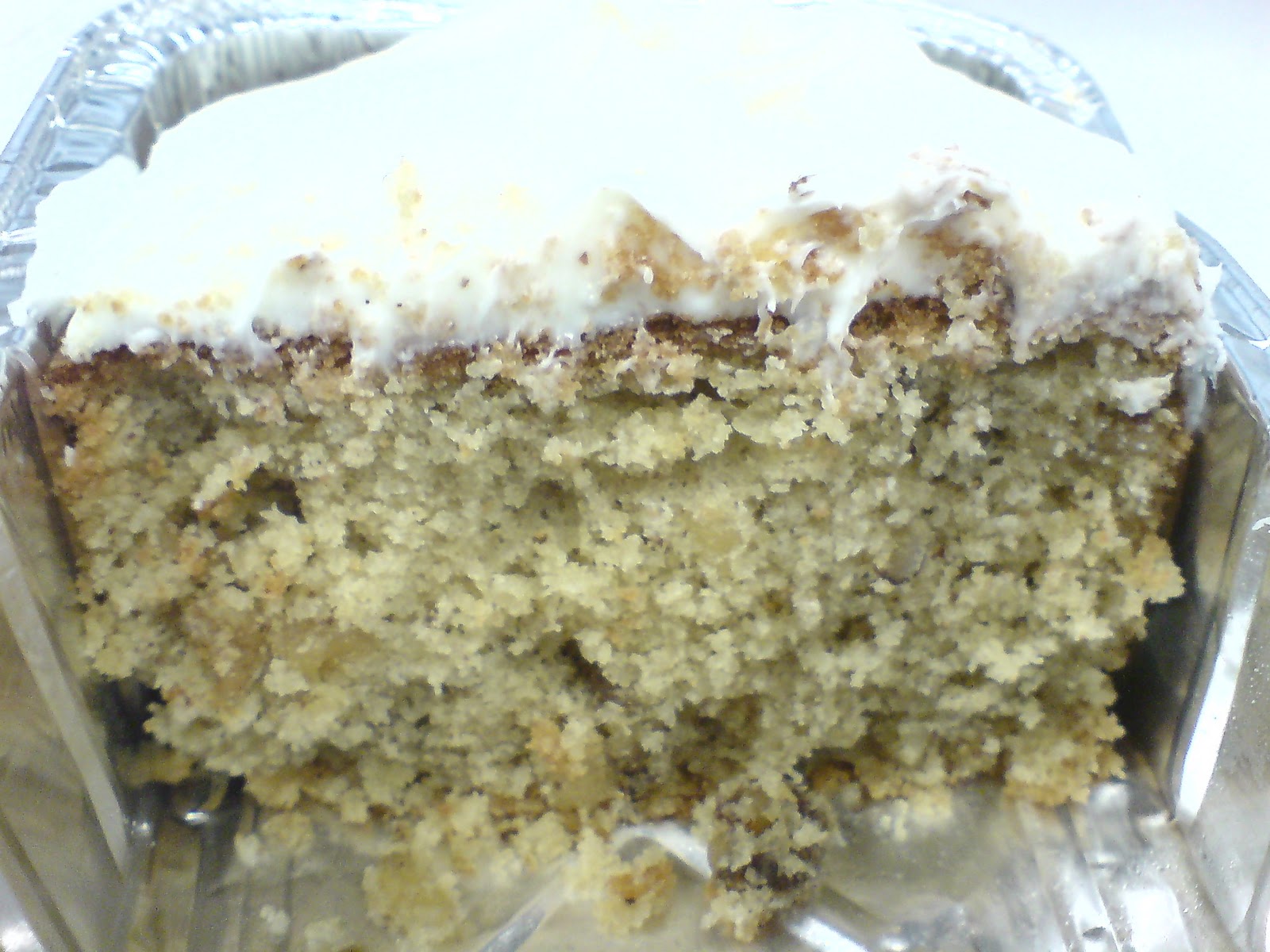
I needed to test out my oven’s baking capabilities so I thought I would go for a tried-and-tested pound cake. There are five pound cake recipes in English Food and this nut cake is the final one. They all have the same basic recipe, but this one being a nut cake, required two ounces of chopped nuts (I went for walnuts) as well as two tablespoons of strong coffee or rum (I went for coffee) extra. A pound cake needs icing and Griggers suggests making the one that is given for the walnut cake recipe from many moons ago. However, there is such an exciting selection of frostings available in American supermarkets that I had to try one. I bought a vanilla. Talking of vanilla, I got to test out the concentrated vanilla sugar from the last post and used half vanilla and half normal sugar.


#267 Nut Cake. This was a good cake – the vanilla sugar was very successful I thought. Although never the most exciting, pound cakes don’t disappoint either, so all was good. It was a bit dry, but I think I over-did mine a little, so it isn’t Griggers’ fault. 6.5/10.

#260 Potato Cakes

During the working week I try my best to go to the gym and eat sensibly. This isn’t necessarily because I am a health fanatic, it is simply because from around the age of 28, it occurred to me that the old metabolism was grinding down a few gears and I was no longer able to scoff all the nice stodge and chocolate I liked to without becoming a massive fat knacker. And so the gym regime and healthy diet was introduced. However, this was just for five days of the week. The weekend however, is there for me to eat and drink all the things I used to like. It’s a trade-off innit?
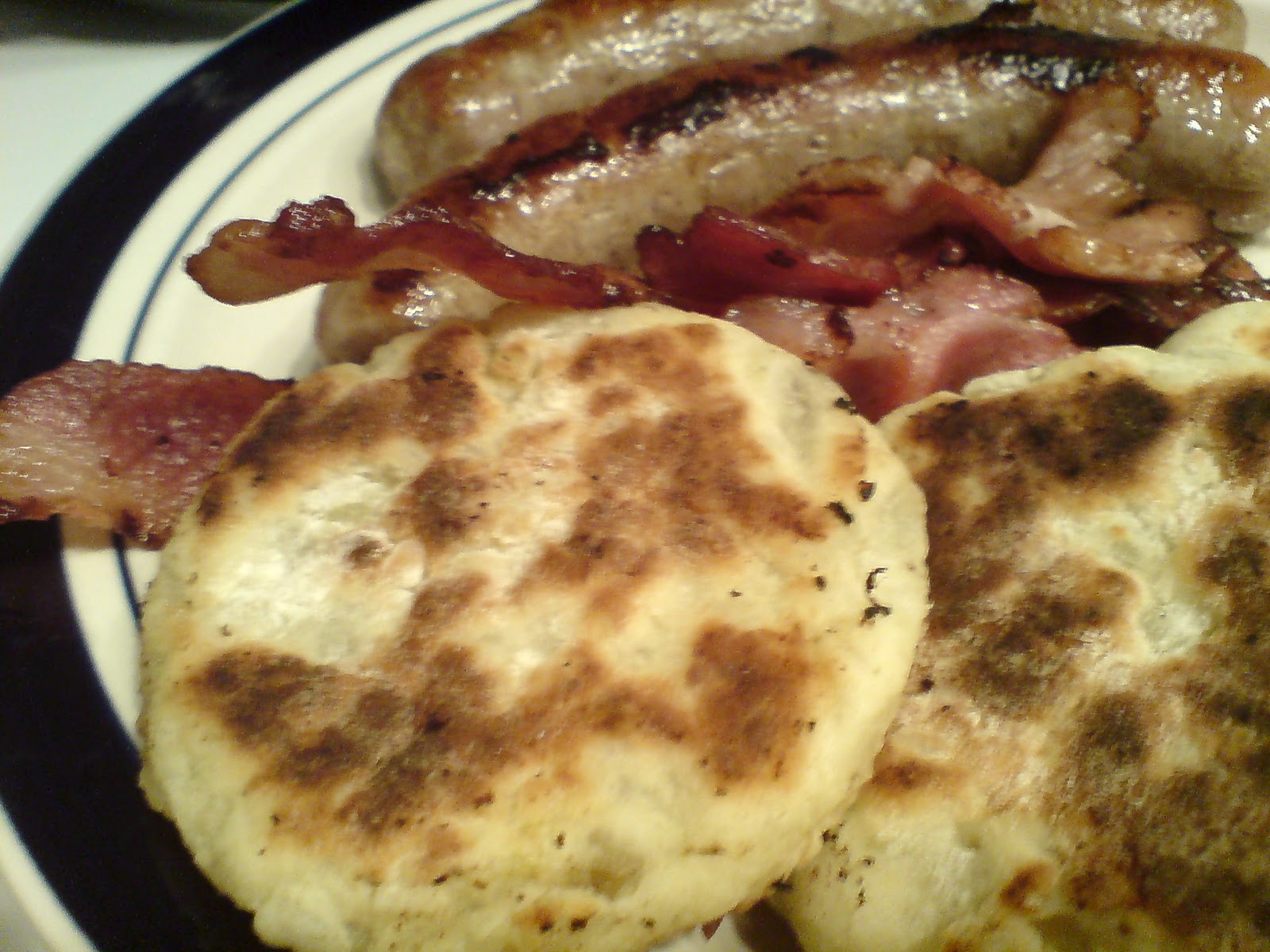
Every Sunday whilst I have been in Texas, my breakfast treat has been pancakes and bacon, but today I thought I’d do these potato cakes from English Food. I’ve always associated potato cakes with Irish food – potato farls being an essential part of the Ulster Fry. However it seems that they are/were popular throughout Britain and Ireland.
To make the cakes, mash a pound of boiled potatoes, then mix in an ounce of melted butter, 4 ounces of plain flour, ½ teaspoon salt, a teaspoon of baking powder and – if you like – an egg. Bring all the ingredients together to form a dough that isn’t too sticky to handle and roll it out. Griggers gives us options as to how to cook and eat them: 1) Roll out thinly and cut out saucer-sized circles and cook on a griddle greased with lard, suet or bacon fat. Roll the cooked cakes around little sticks of salty butter. 2) Roll out the dough into ½” thickness and cut out circles with a scone cutter- griddle along with the bacon, sausage and eggs for 15 minutes. 3) Go Welsh: Add 2 tablespoons of brown sugar and another of white sugar to the mixture. I went for the second option.

#260 Potato Cakes. These were great; and very easy to make too. They had a light texture due to the baking powder as well as a nice soft inside without being stodgy. They went perfectly with the sausages and sweet maple-smoked bacon I ate with them. I shall be making these again. 7/10

#259 Banbury Cakes

There has been previous debate and discussion here on Neil Cooks Grigson on the what makes a Chorley cake different from an Eccles cake. It wasn’t really solved, but I thought that an Eccles cake was made with shortcrust pastry and the Chorley was made with puff pastry. It seems that coming in from leftfield to further confuse us is the Banbury cake. Which is what I thought was a Chorley cake. As far as I can see the only difference is maybe that there are more species in it as well as a touch of rum. Does anyone know the differences between the three?

Banbury cakes certainly go way, way back – Griggers found a recipes for them in a book called The English Hus-wife, written in 1615. Hus-wife: what a great word. I’m going to start using it in conversation.

Anyways. In the EEB department of Rice Uiversity we had a Thanksgiving dinner and we were all asked to bring something in for it. These little cakes seemed like the perfect thing to make for a buffet – no need for slicing or even plates. I’m always slightly nervous of making recipes from the book for these kinds of things in case the recipe is God-awful – like previous bad experiences like the Whim-Wham, English Rarebit, the Rice Cake or the Mocha Cake.

First of all, melt two ounces of butter in a saucepan. Remove from the heat and add four ounces of currants (or if you live in America, raisins!), an ounce of candied chopped peel, two ounces of sugar, ½ a teaspoon each of ground allspice and nutmeg as well as ¼ teaspoon of ground cinnamon and a tablespoon of rum. Allow to cool.

While you’re waiting, roll out some puff pastry thinly and cut seven inch wide circles. Put a spoonful in the centre of the circle in line about five inches long, drawing and folding in the pastry, pinching in the edges. Turn them over and flatten them slightly with the rolling-pin so that you have oval shaped cake. Make three slashes over the top, brush with egg white and then sprinkle with sugar. Bake for 15 minutes at 220°C (425°F). Allow to cool on racks.

#259 Banbury Cakes. These were very good indeed and they went down well at the thanksgiving dinner which was good, where I got the chance to shamelessly plug the blog. I think I prefer these to the Eccles cakes too, though there isn’t much in it. I scoffed down two as soon as they were cool, which wasn’t good as I was meant to be off wheat at the moment. One thing led to another and I ended up drinking wheat beer and eating a giant pizza in Late Nite Pie. Oh dear. 7.5/10.

#257 Cinnamon Toast

Sorry for the lax attitude towards the blog everyone, but I have an excuse! I have now moved into my apartment in Midtown Houston, and I have been getting it filled with furniture. Unfortunately I have no table and chairs yet, so I can’t really get people round for dinner parties just yet. Plus I have pretty basic kitchen equipment at the minute – though everyone at work has been brilliant giving me kitchen stuff, so hopefully all will be up and running as normal pretty soon.


There are still several easy recipes to do in the meantime and this one couldn’t be simpler and is another recipe from Robert May (see this post). Cinnamon toast has been a staple sweet snack in England for a good few hundred years and the recipe hasn’t really changed much, and makes a very good substitute for cinnamon Danish pastry, should you get a midnight craving, as they are actually very similar – especially if May’s method is used because it uses a paste of sugar, cinnamon and claret.

I managed to get a bottle of Texan claret from the most amazing off-license (liquor store) called Spec’s, which is apparently the largest one in the whole of the United States and I actually got lost in the red wine section! It deserves an entry to itself. It is just a good job I don’t have alcoholic tendencies. Anyways, for those of you who know nothing about wine (this includes me, by the way), claret is usually red wine made in the Bordeaux region of France, so technically there’s no such thing as Texan Claret. Funnily enough, the Frenchies don’t recognise claret as a term itself; it’s a very British term used generally from May’s time to describe deep red wines such as Bordeaux and before that in medieval times for spiced wines, such as hippocras. As an aside, there is no recipe for hippocras or even mulled wine in English Food, so I shall try and hunt one out for the blog closer to Christmas.

Anyway, enough of my blabbering, here’s the old recipe that is not simply buttered toast sprinkled with cinnamon and sugar like these days:


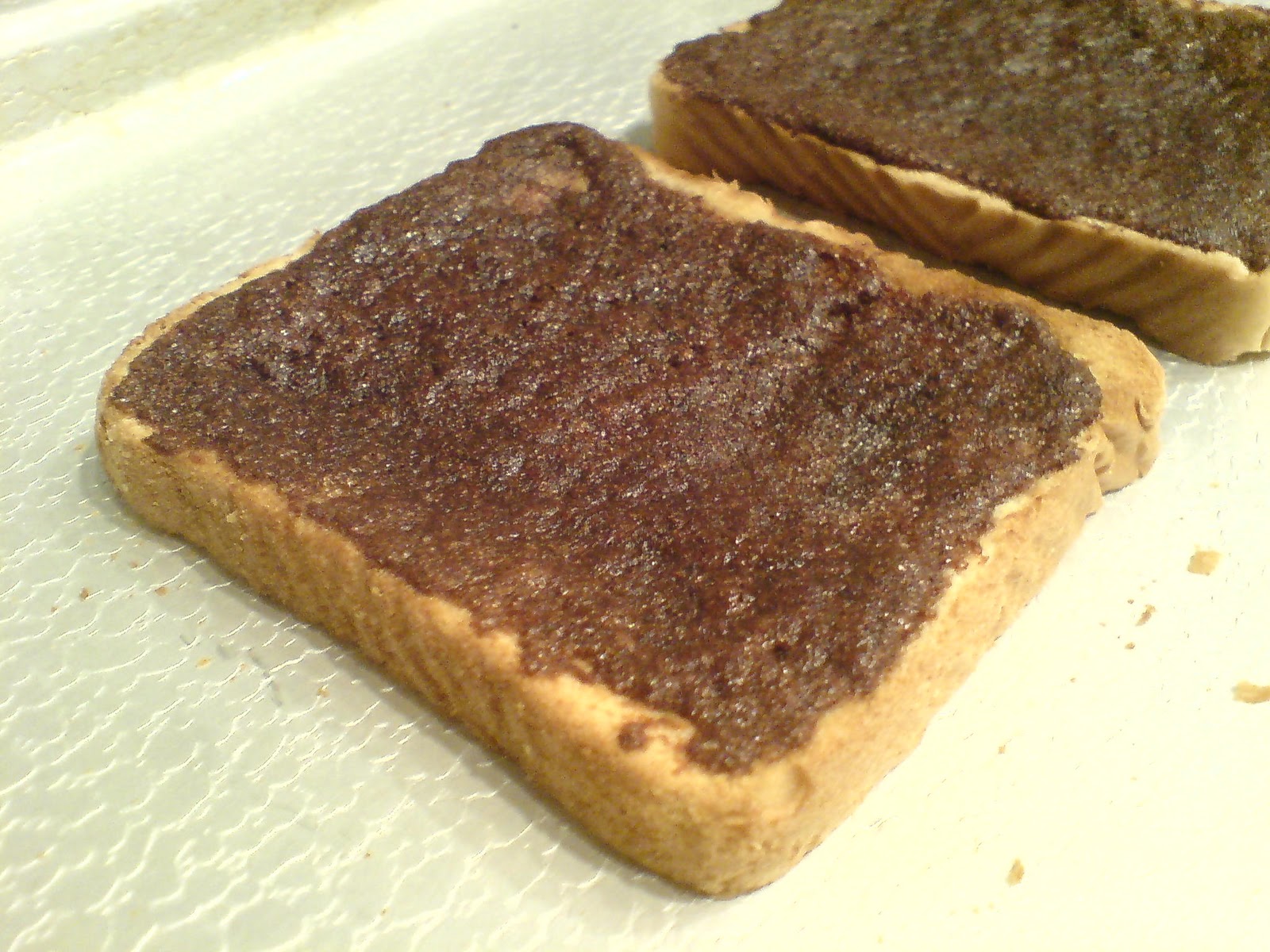
Begin by making the topping by simply making a paste from sugar and cinnamon in the proportions of one tablespoon of sugar to one teaspoon of ground cinnamon. Use the claret to make a nice spreadable paste. Butter some slices of toast, lay them on a baking sheet and spread the paste over them. Warm through briefly in a hot oven for about 5 minutes and serve it forth!

#257 Cinnamon Toast. Forever an English Classic that is much improved by going back to the original way of doing things, although I can’t imagine people going out and buying claret just for the recipe (myself excluded, natch). However, I’m sure if you ever have any red wine knocking around you can use it to make this very simple and delectable sweetmeat. The important thing is to make a paste – it melds together and forms a slight crust, so if you have no wine, use anything else, even water or milk would do, I reckon. I ate four slices, what a pig. 7/10.

#248 Mazarines

I had made a savoury snack for the party and so I thought I’d make something sweet. These are strange little biscuits, or perhaps cakes. I’m not sure which. They appear in the Cakes and Tarts section, but look like biscuits. For some reason, this is important. Anyways, the name of these sweetmeats are a mystery, probably invented in honour of either the Duchesse de Mazarin who lived in Chelsea for a bit, or Cardinal Mazarin of France.

First, the pastry: Cream together 2 ounces of butter with a tablespoon of caster sugar, then beat in an egg yolk, before mixing in 4 ounces of flour and an ounce of ground almonds (use your hands to bring it all together). Roll it out into strips about 2 inches wide, lay on greaseproof paper turning up the edges ready for the filling.

For the filling: Start by spreading some apricot jam down the lengths of the strips. Next, beat 2 egg whites until stiff and fold in 4 ounces of caster sugar, 2 ounces of flaked almonds and a tablespoon of grated plain chocolate. Pour into a saucepan and boil, stirring as you go so that it doesn’t catch. Spoon the mixture onto the strips – a tricky endeavour. Bake at 180⁰C for 45 minutes, allow to cool and then cut on the diagonal.


#247 Mazarines. These were also a disappointment. The pastry was very dry and crumbly and the filling was so unbelievably sweet. Annoyingly, they were nigh on impossible to cut without them breaking up. Not impressed. If were Cardinal Mazarin or the Duchesse de Mazarin, I’d be well pissed-off that these efforts were created in my honour! 2.5/10

#244 Grasmere Gingerbread II

Ah, the Lake District. Hugh and I were not far from Grasmere only last weekend on a little break so I thought I’d make the second of the Grasmere Gingerbreads. You can just imagine William Wordsworth tucking into these after his daffodil sandwiches of an afternoon or whatever. It’s what we would have done if it HADN’T PISSED IT DOWN all weekend. Hey-ho.

This is a bit different to Grasmere Gingerbread I in that it is made with wholemeal flour. Usually wholemeal flour based biscuits and cakes are found in the vegan health food shop and taste awful, but don’t let that put you off; these are delicious and easy to make too:

Start by sieving 8 ounces of flour along with ½ teaspoon each of cream of tartar and bicarbonate of soda and 3 decent teaspoons of dried ground ginger (don’t be scanty, it can take it). Rub in 6 ounces of butter and then mix in 5 ounces of soft dark brown sugar and a dessertspoon of golden syrup. You should end up with a dark rubble. Line a roasting tin or oblong pan with greaseproof paper and pour the mixture in, pressing it down firmly. Bake for 45 minutes at 160⁰C. Remove and cut into rectangles whilst still hot and cool on a rack.


#244 Grasmere Gingerbread II. Really good this one. The wholemeal flour and treacly taste combine well here to make a rich crumbly, though very slightly chewy bittersweet biscuit. I shall definitely be making these again. I reckon if crushed, they would make a very good crumble topping. Tres bon. 7/10

#242 Cacen Gri (Griddle Cakes)

It’s been a while Grigsoners. I am very busy at the moment – and will be for the next couple of months – writing my PhD thesis, so forgive me if the blog entries become a wee bit thin on the ground. The recipes that I can do are those that don’t require difficult-to-get items or dinner parties so I’m a little limited seeing as I spend most of my time in a library these days.

Anyway, enough of that.

These Welsh griddle (or girdle) cakes seemed by the recipe that they would be absolutely delicious. Indeed girdle cakes must be delicious because there’s a few recipes in the book. However, the last time I cooked some (Singin’ Hinnies) they were pretty awful. Grigson doesn’t give any background on Cacen Gri, though I have noticed that there are lots of Welsh recipes – perhaps more than English ones – in the part of the book devoted to griddle cakes and pancakes. Funny that, because when I think of Welsh specialities, I think of leek pie and rarebits not pancakes. They must be terribly fat as the amount of butter and lard in this is huge!

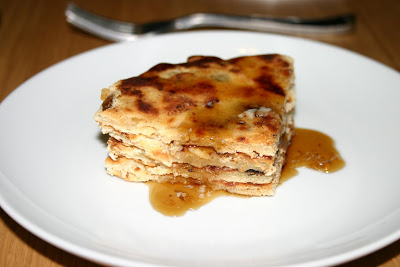
Start off by sieving a pound of flour and a teaspoon each of baking powder and salt into a bowl. Rub in four ounces each of cubed butter and lard. Mix in three ounces of mixed dried fruit and peel and an egg plus a little milk to form a dough. Leave to rest in the fridge for a little while and then roll out thinly and cut into plate-sized rounds. Grease a large pan with a little lard fry the griddle cakes for just two minutes a side on quite a high heat. Don’t overcook them as they go very dry very quickly. They should puff up a little and gain brown spots. Stack them on a warmed plate, add a good knob of butter between each one, keeping them nice and cosy in a warm oven. I served them with some very un-Welsh maple syrup too.


#242 Cacen Gri (Griddle Cakes). I wasn’t sure if I liked these or not. The first batch was over-cooked and all powdery. I soldiered on a tried again though and I think that they were okay. No more than that though. They were still pretty claggy and need lots of butter and syrup. Perhaps that is the secret to these girdle cakes – any amount of flour and fat will taste fine if smothered in enough melted butter and syrup. 5/10.

#239 Rice Bread

Baking is the best form of procrastination because at least you have something to show for it other than a lack of what you should have been doing. I chose this bread simply because I had all the ingredients in. Although it is a rice-based bread, don’t be getting it confused with the awful rice cake I made last year. This recipe is another from Elizabeth David’s tome English Bread and Yeast Cookery, and was very popular with one Lady Llanover who said rice bread is the best for sandwiches. It has gone out of favour since the nineteenth century, let see if it worth bringing back…

First cook three ounces of long-grain rice in double its volume of water in a covered pan. Let it simmer and don’t take the lid off until all the water has been absorbed. Meanwhile, cream half an ounce of fresh yeast in a little water. The recipe calls for quite a lot of salt: between a half and three-quarters of an ounce of it! I measured a shy half an ounce. Dissolve the salt in a quarter pint of water from the kettle and add to it a further 8 fluid ounces of cold water. Place 18 ounces of strong plain flour in a mixing bowl, make a well in the centre and add the creamed yeast and warm salty water. Mix to form a soft dough with your hands, adding more water of flour if appropriate. Cover and leave to rise in a warm place: you know the drill.


Knock back the risen dough and briefly knead, either by hand or with a dough hook, then place in a large greased bread tin that has a three to three-and-a-half pint capacity. Cover once more and allow to prove until it has risen up to the top of the tin. Place in an oven preheated to 230⁰C for 15 minutes and then lower the heat to 200⁰C for a further 15 minutes. Remove the loaf from the tin, invert it, and then place it back in the oven for a final five minutes so that the crust can crisp up.

#239 Rice Bread. A lovely pale, fluffy and slightly spongy bread that was indeed great for sandwiches. I polished most of it off with fried bacon and rocket with mayonnaise. Definitely the best of the plain breads so far, and definitely one of the easiest. I wouldn’t put more than a quarter of an ounce of salt in though as any more and it could have been horrid. 8/10

#237 Hot Cross Buns

It is approaching Eastertime and that means it is the perfect excuse to fill your face with hot cross buns. There are few things as delicious. Grigson says that the bought buns simply don’t live up to proper old-fashioned, home-made ones on account of the omission of the butter, egg and milk and the reduction of spices. I was, therefore, quite excited about the prospect of eating my first real bona fide hot cross bun.

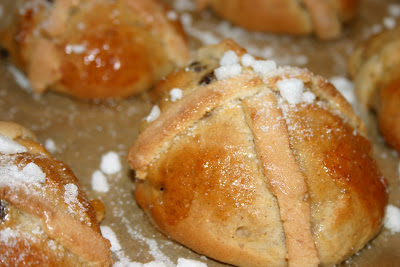
To make them start with a quantity of the basic bun dough that has had spices mixed in with flour. You’ll need one level teaspoon each of ground cinnamon, ground nutmeg and mixed spice, plus half a teaspoon of ground mace. Once you knock back the dough, knead in 3 ounces of raisins and 2 ounces of candied chopped peel. Roll and stretch out the dough into a long sausage and cut it into 18 discs. Roll them into balls and place on baking sheets that have been lined with greaseproof paper. Make sure you leave space enough for them to rise. Brush with beaten egg. Now roll out three ounces of either marzipan or shortcrust pastry and cut strips for the crosses, gluing them onto the buns with beaten egg. Cover the buns and let them prove for about 30 or 40 minutes. Bake at 230⁰C for 10 to 15 minutes. Toward the end of cooking, make a bun wash by boiling together 2 ounces of sugar with 5 tablespoons of water until syrupy. Brush the buns with this whilst they’re still hot and sprinkle over some crushed sugar lumps.


FYI: hot cross buns have nothing to do with Christianity. They are traditionally eaten on Good Friday and many people think that the cross symbolises the crucifix upon Jesus was crucified. Not so. The buns were eaten by Saxons to honour the goddess Eostre – the real reason why Easter exists. The cross itself symbolised the four quarters of the lunar cycle.

#237 Hot Cross Buns. These were very delicious indeed. The dough was very light, yet rich at the same time and the marzipan cross really added to the indulgence. The truly were better than a bought bun – in fact, a totally different creature. Have a go at making them yourself over Easter; they may not be the most pretty-looking hot cross buns you’ve ever seen, but they will be the tastiest! 9/10.

#231 Seed Cake

In my humble opinion, one of the most therapeutic things one can do is spend a few hours baking in the kitchen. Last Saturday I definitely needed therapy – stupid Microsoft wiped a load of my work; I shall not go into the boring details. Baking this cake helped me a bit; though in all honesty, getting completely pissed later on that night helped rather more.

This recipe is a variation on the basic pound cake (see here) and there have been a few of these baked by yours truly (see here). Pound cakes are very easy to make – they’re an all-in-one batter recipe, so not technique is atually required. I would advise you to use a hand mixer over any other type of mixer, which produces a better, lighter cake. Follow the recipe for the pound cake and just add a dessertspoon of caraway seeds. Easy.


#231 Seed Cake. The best of the pound cakes thus far. Not necessarily because it’s the best recipe, but because I think I’m getting better at making cakes. This was deliciously moist and didn’t need any buttercream or anything. The caraway seeds went very crispy inside. To ensure a good cake, I should say again that you should use a hand mixer and that you should also put a dish of water in the bottom of your oven if it is a fan-assisted one to prevent the cake drying out. Anyways, a great cake 7/10.