#253 Payn Pur-Dew (1420)

I haven’t done a historical recipe for a while, so I thought that my first recipe in this new country should be an old English one. It comes from the French pain perdu, which means lost bread, in other words smothered bread. It’s a French recipe but it obviously goes very far back in English history as this recipe proves. It’s from 1420 and is transcribed straight from the source, although Griggers doesn’t say what the source is! To put this into historical context, Henry V is the King of England and so he will have indulged himself on these in banquets; indeed, the inclusion of sugar in the recipe made it very regal. In the fifteenth century, honey would have been used as a sweetener. Eventually this dessert morphed into Poor Knight’s of Windsor – of which there are two recipes in English Food and I will try and do them soon so we can compare and contrast. Anyways, here is the recipe:

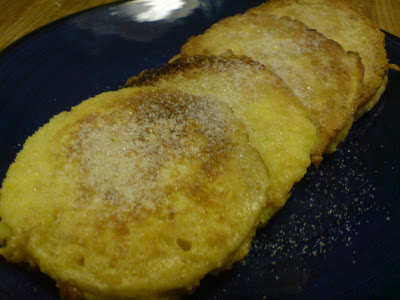
Take fair yolks of eggs, and separate them from the white, and drawn them through a strainer, and take salt [a pinch] and cast thereto; then take fair bread, and cut in round slices; then take fair butter that is clarified, or else fresh grease, and put in a pot, and make hot; then take and wet well the slices in the yolks, and put them in a pan, and so fry them up; but be ware of them cleaving to the pan; and when it is fried, lay them on a dish, and lay plenty of sugar thereon, and then serve forth.


I used clarified butter – not sure what is meant by grease, I suppose the author meant lard or dripping. It is important to clarify the butter, otherwise it and the bread will burn. The word fair in the recipe means fresh; so the quality of ingredients was important in medieval times just as nowadays. Griggers suggests using brioche should you have it. I didn’t.

FYI: Payn per-dew is also called French toast sometimes, but in the north of England I know it as ‘eggy bread’ and it is not just the yolks but the whole egg plus some milk is used. Slices are fried in a little oil and eaten with a scraping of tomato sauce or brown sauce and is certainly not a pudding!

#253 Payn Pur-Dew (1420). A simple and historical recipe that is a wee bit bland by our modern tastes. I think that in the 1420s it would have been an exciting dish, but I prefer it made with the whole egg and some milk to make it less rich and serve as a savoury rather than a sweet. It might have been better with syrup or honey on it instead; something with a bit of heady flavour. So, all-in-all it was okay, but not amazing. 4/10.

#239 Rice Bread

Baking is the best form of procrastination because at least you have something to show for it other than a lack of what you should have been doing. I chose this bread simply because I had all the ingredients in. Although it is a rice-based bread, don’t be getting it confused with the awful rice cake I made last year. This recipe is another from Elizabeth David’s tome English Bread and Yeast Cookery, and was very popular with one Lady Llanover who said rice bread is the best for sandwiches. It has gone out of favour since the nineteenth century, let see if it worth bringing back…

First cook three ounces of long-grain rice in double its volume of water in a covered pan. Let it simmer and don’t take the lid off until all the water has been absorbed. Meanwhile, cream half an ounce of fresh yeast in a little water. The recipe calls for quite a lot of salt: between a half and three-quarters of an ounce of it! I measured a shy half an ounce. Dissolve the salt in a quarter pint of water from the kettle and add to it a further 8 fluid ounces of cold water. Place 18 ounces of strong plain flour in a mixing bowl, make a well in the centre and add the creamed yeast and warm salty water. Mix to form a soft dough with your hands, adding more water of flour if appropriate. Cover and leave to rise in a warm place: you know the drill.


Knock back the risen dough and briefly knead, either by hand or with a dough hook, then place in a large greased bread tin that has a three to three-and-a-half pint capacity. Cover once more and allow to prove until it has risen up to the top of the tin. Place in an oven preheated to 230⁰C for 15 minutes and then lower the heat to 200⁰C for a further 15 minutes. Remove the loaf from the tin, invert it, and then place it back in the oven for a final five minutes so that the crust can crisp up.

#239 Rice Bread. A lovely pale, fluffy and slightly spongy bread that was indeed great for sandwiches. I polished most of it off with fried bacon and rocket with mayonnaise. Definitely the best of the plain breads so far, and definitely one of the easiest. I wouldn’t put more than a quarter of an ounce of salt in though as any more and it could have been horrid. 8/10

#237 Hot Cross Buns

It is approaching Eastertime and that means it is the perfect excuse to fill your face with hot cross buns. There are few things as delicious. Grigson says that the bought buns simply don’t live up to proper old-fashioned, home-made ones on account of the omission of the butter, egg and milk and the reduction of spices. I was, therefore, quite excited about the prospect of eating my first real bona fide hot cross bun.

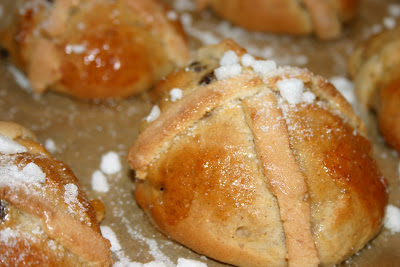
To make them start with a quantity of the basic bun dough that has had spices mixed in with flour. You’ll need one level teaspoon each of ground cinnamon, ground nutmeg and mixed spice, plus half a teaspoon of ground mace. Once you knock back the dough, knead in 3 ounces of raisins and 2 ounces of candied chopped peel. Roll and stretch out the dough into a long sausage and cut it into 18 discs. Roll them into balls and place on baking sheets that have been lined with greaseproof paper. Make sure you leave space enough for them to rise. Brush with beaten egg. Now roll out three ounces of either marzipan or shortcrust pastry and cut strips for the crosses, gluing them onto the buns with beaten egg. Cover the buns and let them prove for about 30 or 40 minutes. Bake at 230⁰C for 10 to 15 minutes. Toward the end of cooking, make a bun wash by boiling together 2 ounces of sugar with 5 tablespoons of water until syrupy. Brush the buns with this whilst they’re still hot and sprinkle over some crushed sugar lumps.


FYI: hot cross buns have nothing to do with Christianity. They are traditionally eaten on Good Friday and many people think that the cross symbolises the crucifix upon Jesus was crucified. Not so. The buns were eaten by Saxons to honour the goddess Eostre – the real reason why Easter exists. The cross itself symbolised the four quarters of the lunar cycle.

#237 Hot Cross Buns. These were very delicious indeed. The dough was very light, yet rich at the same time and the marzipan cross really added to the indulgence. The truly were better than a bought bun – in fact, a totally different creature. Have a go at making them yourself over Easter; they may not be the most pretty-looking hot cross buns you’ve ever seen, but they will be the tastiest! 9/10.

#227 Wigs

Wigs go right back to the Middle Ages when a ‘wig’ meant a ‘wedge’. Bakers would make a sweetened cake using yeast as a raising agent, making cuts so that wedge shapes were made. This recipe is from Elizabeth David’s book, English Bread and Yeast Cookery – a classic work that I do not own yet! – and is a Seventeenth Century recipe. Eating sweet cakes really took off in that period of history as people realised that sweet cakes and breads went really nice with morning or afternoon tea. It was during this time that Teatime or High Tea came into being and a whole chapter of English Food is devoted to it. This is a good recipe to try if you’ve never made bread before as there is no kneading, er, needed!

To make your own wigs start off by creaming half an ounce of yeast in six fluid ounces of warmed milk. Beat in 12 ounces of plain flour (not strong white flour – this is more of a cake than a bread) to form a loose dough before mixing in four ounces of softened butter. Next, mix in 4 ounces of caster sugar and ½ teaspoon each of mixed spice and ground ginger along with two or three teaspoons of caraway seeds. Cover with cling film and allow to rise – a couple of hours should do it. Knock back the dough and divide it between two greased 9 inch sandwich tins, making four cuts (i.e. eight wedges). If the dough is too soft to pick up and handle, add some more flour. Cover the sandwich tins with large billowing polythene bags – you don’t want bag to touch dough – and let the wigs prove for 20 – 40 minutes. Bake in the oven for 15-20 minutes at 200⁰C. Eat warm.


#227 Wigs. I liked these – not too sweet, and great hot with plenty of butter on them. The genius thing was the addition of caraway seeds. The fragrant nutty taste may not be for everyone, but I really like it. It is a shame they have gone out of favour. These are definitely worth a go, particularly because they are a real little bit of English history. 6/10

#224 Basic Bun Dough

One of Griggers’ main bugbears in the 1970s was the massive decline in the quality of all things bready. There are of course artisan bakers that do make excellent bread – Barbakan in Chorlton, Manchester is the one near me – but generally it is the supermarket bread we seem to buy and endure. Of course, nowadays, supermarkets have in-store bakeries in supermarkets, so there are improvements, but it is still bread done in the cheap with additives. I think the point that Jane is getting at is we don’t know how good bread can be because we don’t bother to bake it ourselves. This is a shame, because artisan bread can be easily gotten hold of at a fraction of the price of a supermarket loaf, if you bake it yourself. I am trying my best at this concept and am getting better. This recipe is one that Griggers hails the most as it can be used as a base for hot cross buns and Chelsea buns; the supermarket ones are “dull” and this is because the ingredients that make them so good are omitted, such as sugar, eggs, butter and milk.

This recipe can be used as a base, but I wanted to see what the simple rich basic bread buns tasted like, partly through interest, but mainly because I wanted to do a practise one before I do the hot cross buns on the run up to Easter.

Begin by mixing together a pound of strong white bread flour with a quarter of a teaspoon of salt in a warmed mixing bowl. Measure out 2 ounces of caster sugar, and place one spoonful of the sugar into a pudding bowl along with an ounce of crumbled fresh yeast into a pudding bowl and four ounces of flour from the mixing bowl. In a jug, mix together a quarter of a pint each of milk and boiling water straight from the kettle. Whisk this into the yeast mix to form a smooth batter and leave to rise for around 15 minutes until the whole thing has become a satisfying yeasty cushion. Whilst you are waiting for it to rise, stir the remainder of the sugar into the flour and rub 3 ounces of butter into it. Make a well in the centre and pour in a lightly beaten egg and the foaming yeast mixture and mix together with a wooden spoon to form a dough. Turn the dough out onto a floured surface and knead for a good 10-15 minutes adding flour as you go so that the dough is slightly rubbery and “a moderately tacky, but not sticky, texture”. The mixing bowl should then be washed and greased so that the dough can sit inside and rise and double in bulk – make sure you cover it with some cling film or a damp tea towel. Fresh yeast rises much quicker than dried, so it’s great if you are an impatient bread-baker.


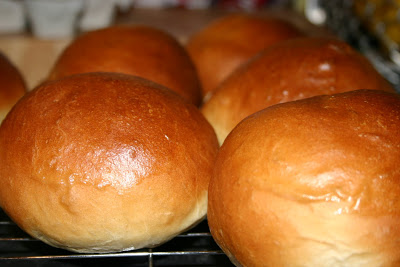
The bread can be used for whatever purpose you like, but if you want them au naturale, then roll the dough into a long sausage shape and divide into 12 pieces and form them into round buns. Place on a baking tray lined with baking paper, leaving gaps for when they rise. Cover them and prove for at least 30 minutes. Bake for 10-15 minutes at 230⁰C, remove and brush them with some milk to make them shiny when they cool.

#224 Basic Bun Dough. This bread was delicious! Slightly sweet, rich and very fluffy. I can’t wait to do the hot cross buns – they must be divine because these basic buns are a 7.5/10.

#217 Granary Bread with Walnuts

It’s been a while since I’ve done a bread recipe, and I’m definitely out of practise. I chose this one because it seemed suitably wintery, plus it used up flour that has been sat in the cupboard for a while now and I am trying to clear them, as I’ve mentioned previously. (As an aside, does anyone have a recipe that uses rice flour? It’s been sat there since that rubbish rice cake.) The main ingredient is granary flour, though I’m sure you could use wholewheat instead; I used a little stoneground flour left over from the Northumbrian Wholemeal Scones and Doris Grant’s Loaf from yonks ago. Grigson calls granary flour ‘Granary’ flour, because it’s a proprietary blend of malted flour and other nice things from one particular miller, though she doesn’t say who.

Don’t be put off by bread-making, Grigsoners, I really like doing it, and did start to get good at it, and even if it is a bit on the heavy-side, it will taste so much better than bought stuff. I think that it is the yeast flavour. Supermarket bakeries cannot compete – even with your worst effort!
Sift together a pound of ‘Granary’ flour, 4 ounces of strong white bread flour and 2 teaspoons of fine sea salt in the bowl of a food mixer. Add a packet of dried fast-action yeast (I reckon that’s about 2 level teaspoons) and mix well. Using the dough hook, stir in around ½ pint of warm water so that a soft, rough dough forms around the hook. Add two tablespoons of walnut oil and briefly knead, add more flour to make it smooth before placing in an oiled bowl. Cover with clingfilm and allow to ferment in a warm place until it has doubled in bulk. The time could be anywhere between an hour and several hours, depending on where you do this. As I don’t have an airing cupboard, I pop the bowl over the radiator. Knock back the dough (i.e. punch the air out of it) and knead in 4 ounces of roughly chopped walnuts. Now either place in an oiled loaf tin (or tins) or make it into a shape. I decided on a nice big round rustic loaf (i.e. the easiest). Use a very sharp knife and make some slashes on the top of the loaf and, bake in a very hot oven – 230⁰C – until cooked; this will depend upon the shape and size of your loaf, mine took 25 minutes. The way to tell is to tap the bottom – if it sounds hollow, it is done. Cool on a wire rack and eat with cheese, a winter stew or warm with butter and honey, I reckon.


#217 Granary Bread with Walnuts. Definitely the best bread so far – dense and with a good crumb, but not heavy. The flavour of the walnuts and the oil come through well, but are relatively neutral so that it would go equally well with sweet or savoury food. It’s very easy to make, all you need is some patience. Great stuff – a really nice, country loaf that is a little different, yet very classically English. 7.5/10.

#195 Canapes a la Creme

The entrée for the dinner party. It’s one of those recipes that I’ve never got round to because – frankly – it’s never really seemed that interesting and a bit of a rigmarole to produce (there quite a few of these!). Grigson says that they are “[a] fine mixture of hot, rich, piquant and cold.” I don’t really know why this recipe is in English Food, I’m sure that there are other canapés in book Savouries à la Mode by Mrs de Salis she could’ve nabbed. Perhaps she chose this one because the ingredients are quite English. Anyways, here is the method, if you want to try and make some for yourself:

Cut some white bread in centimetre thick slices. Cut out circles and fry them in butter. Grigson doesn’t say how large they should be – I used a highball glass. Next put anchovy fillets on each slice – she says three, but that seemed excessive to me for the size of fried bread I’d cut out, so just added one. Finally add a spoonful of cold clotted cream to each canapé and serve straight away.

The canapes in production

#195 Canapés à la Crème. 3/10. They weren’t vile – all of the ingredients that go to produce this are among my favourite foods – they were just odd and uninspiring. There was not too much fattiness from the fried bread and cream, and the anchovies were too much (it’s a good job I didn’t add three!). I think they could’ve been improved if a cream cheese or crème fraiche mixed with chives as suggested on the night had been used rather than clotted cream. Still, they were easier to make than I thought – particularly when I had my army of sous chefs with me! Cheers guys.

#167 Brown Bread Ice Cream

Aside from all the smoked stuff we bought at the Cheshire Smokehouse, we also got ourselves some nice desserts (and VERY nice they were too). To go with them I knocked up this very traditional brown bread ice cream. It’s an easy one as you don’t require an ice cream maker to make it, and is also the last of the ice creams in the book. It’s seems a little over-simplified as dry baked breadcrumbs are used – as far as I know it is caramelised breadcrumbs that give it a special crunch. Hey-ho – one must do as one is told.

I don’t know anything about its history – I know it’s very English, but I can’t find any websites that say how or why the addition of brown bread to ice cream came about. If you know, send me a comment! Ta.

First of all spread six ounces of wholemeal breadcrumbs on a baking tray and bake in a moderate oven until crisp – around 20 minutes. Whilst they cool, beat together ½ a pint each of double and single cream along with 4 ounces of pale brown sugar until it thickens and the sugar dissolves. Now mix a tablespoon of rum into 2 egg yolks and add that to the cream mixture and beat it in well (the rum is optional, but makes all the difference). Whisk 2 egg whites until stiff and fold those into the creams, and then lastly the cooled breadcrumbs. Pour into a tub and freeze. There’s no need to stir it.


#167 Brown Bread Ice Cream – 6/10. A nice ice cream, but I was slightly disappointed; the brown bread, brown sugar and rum produced a lovely subtle malty taste, but because the crumbs were not caramelised with some sugar, they went soggy. I’m not sure why Jane doesn’t include this step, as it would take a good ice cream and transform it into a delicious one. If I were to make it again, I would caramelise the dried crumbs with a tablespoon or two of sugar and an ounce or two of butter so that they get really crisp before folding them into the cream.

#123 Bread Sauce

Ahhh! The bread sauce. A total necessity to go with roast pheasant (or with any roast game or poultry). You don’t get much a more English accompaniment to a roast dinner than this – though not many seem to have tried it, put off by the soggy bread aspect. Don’t you be put off, reader; the bread completely disintegrates to make a nice smooth sauce. Plus, the sauce is prevented from being at all gluey by the addition of butter or cream (or a mixture of the two). If you’ve never made it, have a go – it’s very easy and can be made ahead of time as long as you cover it in cling film to prevent a skin forming and you reheat it in a bowl over a pan of simmering water.

FYI: This is a very old recipe, bread sauces go back to Medieval times though stock was used as a base more often than milk. Thick sauces were required then because trenchers (plates made of dried bread) would have gone soggy otherwise. Sauces thickened with flour or eggs would not work for that as they would either glue or custard respectively!

OK, the recipe:

Begin by putting ¾ of a pint of whole or Jersey milk into a basin along with a small onion that has been halved and studded with 3 or 4 cloves. Place the basin over simmering water and keep the milk just below boiling point for as long as possible so that it can be infused with the flavours. Whilst that is going on use a food processor to make 4 ounces of white breadcrumbs. Take out the onion and cloves and whisk in the breadcrumbs until it is thick. The suace will thicken up after a few minutes, but if it’s a bit on the thin side make some more breadcrumbs and whisks them in. Season the sauce with mace or nutmeg (or both), salt, white pepper and a pinch of Cayenne pepper. Lastly, enrich the sauce with 1 ½ ounces of butter or 2 tablespoons of cream (or a bit of both). Pour into a ‘sauce tureen’ and add an extra sprinkle of Cayenne, says Griggers.

#123 Bread Sauce – 9/10. I loved this; creamy, rich, but not sickly at all. I’ve made it before, but this definitely the best recipe for it so far. The old fashioned spices really made it work for me.

#117 Mrs Borthwick’s Yorkshire Teacakes

Been very busy with work and decorating folks, sorry for being a little slack of late. I have had the chance to do a couple of recipes – trying to do at least ten a month, but not sure if I’ll make it this February…

Being a Yorkshireman I thought I’d make these Yorkshire teacakes. The currant teacake reminds me of my Mum; she’s rather partial, though I didn’t really know that they were particularly Yorkshire, I glad they are. They’re a large sweetened teacake with mixed fruit in them and traditional way to eat them is to slice them crosswise and eat with butter and cheese, though I like them toasted with butter. Each to their own.

Now I’ve started to crack the art of yeast cookery, I’m enjoying bread-making and these are easy – the fruit and sugar hide a multitude of sins – and taste much better than bought stuff. Part of the reason behind this is the use of fresh yeast, which gives a much better flavour than the dried stuff, plus the bread rises much more rapidly I’ve noticed.

Oh, and Mrs Borthwick is some reader of one of Griggers’ columns and sent her this recipe. In case you were wondering.


Anyways, this makes eight large ones:

Sieve together 1 ¼ pounds of strong plain flour, 2 ounces of sugar and a pinch of salt into a big mixing bowl. Rub in an ounce of lard and stir in 3 ½ ounces total of currants and mixed peel (have the ratio according to your taste). Make a deep well in the centre of the flour and crumble in an ounce of fresh yeast and then grate plenty of nutmeg over the whole thing. Next, measure half a pint of room-temperature whole milk and add a quarter pint of boiling water to it. Pour the lot into the well. Do not worry that it looks a horrible mess, it is supposed to. Flick a little flour over the top, cover and leave to bubble in a warm place for 15-20 minutes, or whatever. Mix to form a dough, adding more flour if required, and knead for a few minutes. Divide the dough into eight pieces and knead each again, fold them inwards so they form little plump breadcakes. Put onto greased baking trays and allow to rise again for another 15 minutes. Bake at 220ºC for 30 minutes, turning them over in the final 5 minutes. When ready place on a wire rack and brush with milk to give them a shine.

#117 Mrs Borthwick’s Yorkshire Teacakes. 6.5/10. Really nice teacakes that require minimum effort for pretty good results, though I would add more currants than this recipe I think. I really loving the bread cookery – Hot Cross Buns are a-calling, me-thinks!