#272 Melted Butter

As our Jane quite rightly points out in English Food, many old recipe books suggest serving meat, fish and vegetables with good butter or good melted butter. This is not just high quality butter melted on the food, but a butter sauce not unlike hollandaise. The main difference being that flour is used to thicken the sauce instead of egg yolks, which makes the sauce much easier to make. In The Experienced English Housekeeper by Elizabeth Raffald, there are quite a few mentions of it, but no actual receipt. The recipe given here is from The Cook’s Guide by a certain Charles Elmé Francatelli who was briefly the chef at Buckingham Palace during the reign of Queen Victoria. Oh la-dee-da! (He left because he was disgusted with the filthiness of the kitchens.)
Anyways, the sauce seemed to be the perfect accompaniment to the poor old lobster I accidentally dismembered, then boiled. I’ll give the basic recipe and then the variations…
To make the sauce it is best to do the whole thing in a bain-marie or double boiler – i.e. a bowl over simmering water.  Weigh out 9 ounces of unsalted or lightly salted butter – Griggers suggests using a good Danish butter – melt one third of it in the ban-marie with some pepper and nutmeg. Next, stir in an ounce of flour and ¼ pint of cold water, using a whisk to prevent lumpiness. Heat until the sauce is at simmering point, then turn the heat right down and leave for 20 minutes for the sauce to thicken. Now beat in the rest of the butter piece by piece using the whisk. Add any flavorings you want at this point (see below for some suggestions). Season with lemon juice and salt, plus more pepper if required. Lastly, add a tablespoon of double cream for richness.
Flavorings:
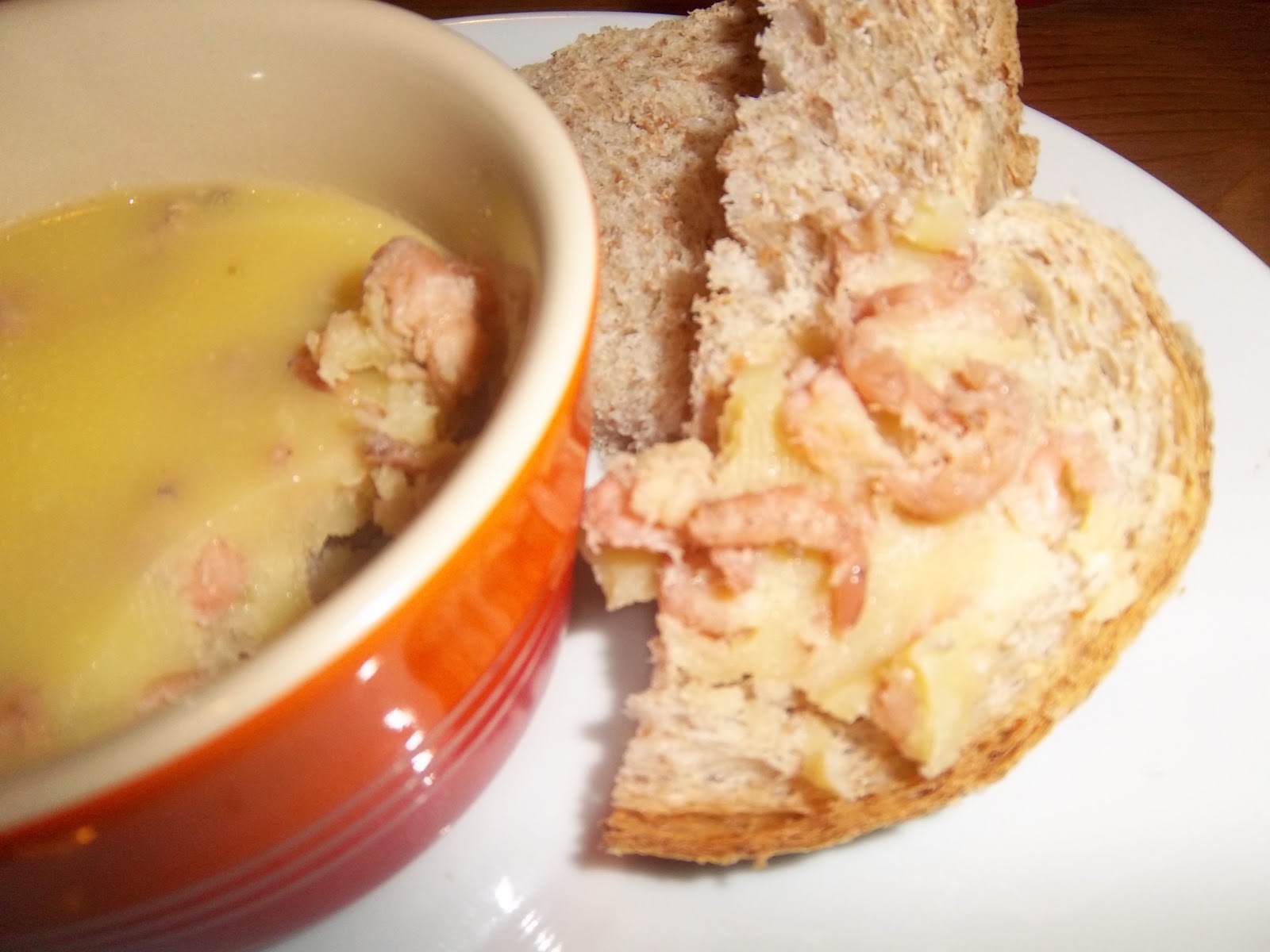
Shrimp sauce – add some brown shrimp to the sauce at the end; use fish stock instead of water if you like
Lobster and crab sauces – add the chopped flesh plus some Cayenne pepper. If the lobster was a lady lobster with roe, then pass it through a sieve into the sauce.
Anchovy sauce – add some anchovy essence.
Herb sauce – add plenty of chopped herbs to the sauce near the end of cooking. For larger herbs like sorrel and spinach, steam and chop them before adding them to the sauce.
For the sauce I made, I didn’t want to chop the lobster up, so I stirred in the brown meat (which people think is inedible because of its consistency, but it is delicious) and some chopped parsley and provided it in a jug to be poured over the lobster halves.
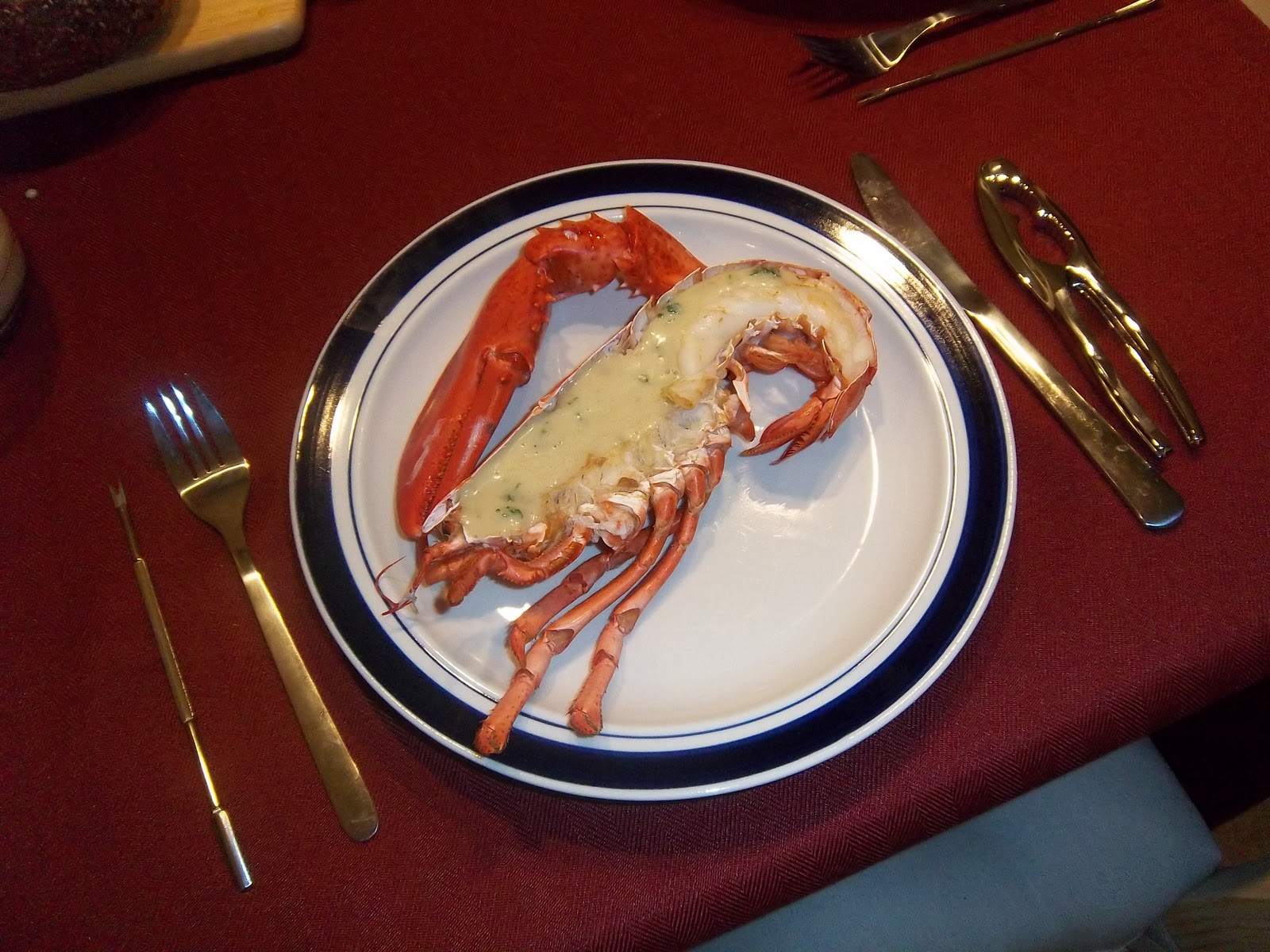
Check out the fancy lobster tools!
#272 Melted Butter. I really like this surprisingly light sauce and it complimented the lobster brilliantly. Plus it was much easier than a sauce hollandaise – one didn’t have to stand next it hoping it wouldn’t split. I imagine it would be good to serve with fish, potatoes and asparagus for a Sunday lunch in the summertime. A definite winner this one.

#271 How To Boil Crabs, Lobsters, Prawns and Shrimps

A woman should never been seen eating and drinking, unless it be lobster and Champagne, the only true feminine and becoming viands.

Lord Byron 1788-1824
A freshly boiled crab or lobster is the most delicious crab or lobster. Apparently. In England, this is not something that commonly happens in a typical household. Like all our meat and fish, the animals that provide us with all that delicious protein are helpfully done away with by burly men in abattoirs, boats or warehouses.  We have lost touch with our food rather and find the idea of killing an animal for food ourselves distasteful. Pretending this doesn’t happen, in my opinion, is the distasteful act.
That said, I am not actually comfortable myself with killing animals, and as any previous reader of the blog will know, killing three eels was most distressing for me. Now it is the turn of some shellfish. This recipe is one that I never did back in England because I simply never saw live crabs and lobsters, prawns or shrimps in fishmongers. Houston, however, is a very different state-of-affairs. There’s live seafood in pretty much any supermarket you walk into here.
The lobster tank in Central Market, Houston
So if you stumble upon a live crab or lobster in the local fishmonger or supermarket here is what to do. Well, as you’ll find out, it maybe isn’t what you are meant to do….
The main point I wanted to get across is that boiling seafood can be humane (or at least no more or less humane than, say, killing a cow with a stun-gun). In English Food, Jane Grigson says that RSPCA guidelines suggest putting the animal in cold salted water and letting the water heat up – apparently when a certain temperature is reached, the creature expires ‘without suffering’. Guidelines have changed rather and nowadays it’s suggested that the little arthropod is popped into the freezer until it falls into a torpor. When plunged into the water, it’s dead before it has a chance to wake up. (The other method is to stab it in the top of the head using a sharp knife and a mallet.)
So, first things first, my mate Danny (who was helping me out with the cooking) got a lobster from Central Market. On the fishmonger chap fishing out the one we chose, I suddenly felt a pang of guilt, so we hurried to my freezer to get it nice and sleepy. Whilst we waited, the salt water into which it was boiled needed to be prepared. The water needs to be very salty. If you can, use sea water, if not dissolve enough sea salt so that the briny solution will bear an egg (this requires a lot of salt). Bring to the boil.
I was informed that the lobster would take 20 minutes or so to fall asleep. This was total nonsense, because 90 minutes later it was still moving around. Shit. By now we’d had a fair few glasses of wine due to the stress. A little later, the lobster seemed pretty inert, so we decided this was the time. Like, I said before, the idea of this post was to do away with some misconceptions about killing seafood in boiling water. So sure I was of this, I filmed the process, so you get a rare glimpse of me in action! Unfortunately things didn’t quite go to plan, and I may have reinforced those misconceptions. Oh dear.
Next time (if there is a next time) I’ll just throw the thing straight in!
Okay, back to the cooking. The cooking time is 15 minutes simmering for the first pound and then an additional 10 minutes for every extra pound.
For shrimp and prawns: 3 minutes for large prawns and for small shrimps, simply let the water come up to the boil again and they’ll be done.
Serve the shellfish simply, says Griggers, with brown bread, butter and lemon wedges.
#171 How to Boil Crabs, Lobsters, Prawns and Shrimps. Well that was an event! Aside from the auto-dismemberment episode, the cooking itself went very well. I split the lobster lengthways, removed the brown meat and used it to make a butter sauce (see next entry, when I write it!), and grilled the lobster with butter briefly. Delicious. 8.5/10.

#270 Mereworth Biscuits

The move back to Houston after almost a month back in England has left me very homesick indeed and definitely in need of some therapy of some kind, especially when Sunday came around. Personally, I find nothing more therapeutic that having a good baking session. Unfortunately, I could not arsed to leave my flat and buy ingredients.  The Teatime chapter of the book has received the most attention out of all the chapters, and I assumed that all the remaining recipes required either ingredients or equipment that I have not yet acquired.  Not so, these little savory biscuits; they are made up of just plain flour, butter, milk and a pinch of salt.
I’d not heard of these before, but they are supposed to be served with butter and cream cheese and that sort of thing. I don’t like to quote big chunks of Jane Grigson’s writings on the blog, but I think this post requires it – her little introduction to this recipe is so evocative that I can’t resist. Enjoy:
We once looked down on the perfect Greek cross of Mereworth Castle through young beech leaves, not long after we had visited the Villa Capra at Vicenza, which stands right up on a dusty hill surrounded by long grass. And here in the spring countryside of Kent was this perfect replica, with the same collected elegance, far below the valley. I should like to see the kitchens of Mereworth, where these biscuits were made in the nineteenth century.”
God, she is good. It’s a shame she is no longer with us. She goes on to tells us that the recipe comes from a book called Choice Recipes by a certain Lady Sarah Lindsay.
Mereworth Castle
This recipe make quite a large number of biscuits, I imagine that the dough will freeze perfectly well like most biscuit doughs do. It’s also a very easy dough to make, so if you’ve never baked before, this could be a good initiation!
Begin by rubbing one ounce of butter into eight ounces of plain flour along with a pinch of salt. Make a well and add some hot milk, bring the dough together adding more hot milk until it becomes firm but soft. Give it a knead. There’s quite a lot of lee-way here, unlike pastry, the hot milk and kneading is supposed to make the dough stretchy and it can take quite a bit of liquid. If it is a little too wet, sprinkle with some more flour. The dough can now be rolled out extremely thinly – make it as thin as possible, so thin you can see the work surface beneath. Cut out two inch circles with a plain biscuit cutter and bake for no more than five minutes at 220°C (450°F) until slightly golden. Some will produce giant bubbles others will not, but they will look beautifully home-made! Keep somewhere airtight as they do go soft very easily.
#270 Mereworth Biscuits. These were quite nice and went well with whatever bit and bobs I found in the fridge to eat with them. I do like cheese and biscuits but rarely ever think to buy them, apart from at Christmastime. These were good, but there are more English savory bikkies that I personally think are better, so I’m going to give them a safe 5/10.

#269 Elizabeth David’s Everlasting Syllabub

I made this syllabub to end to the little meal Hugh and I cooked for Maartin and Ninja. I’d had a feeling no one had tried one before as they have gone out of fashion rather. I’d only had one in my life before.
Syllabubs were very popular up until recently. Originally they were simply a mixture of ales or cider mixed with milk or cream, which was probably like a boozy curds-and-whey. The more solid, whipped and ever-lasting syllabubs first appeared in the seventeenth century, according to Griggers, although both were kinds were obviously eaten because recipes for both appear in the Experienced English Housekeeper by Elizabeth Raffauld from 1769 (I have recently got hold of a copy of it).
The recipe in English Food, is from a pamphlet called Syllabubs and Fruit Fools, written by the great Elizabeth David, but I thought I’d give this one from Elizabeth Raffauld too, you know, for those of you who want to keep it real. And have your own cow….
“To make a Syllabub under the cow
Put a bottle of strong beer and a pint of cider into a punch bowl, grate in a small nutmeg and sweeten it to your taste. Then milk as much milk from the cow as will make a strong froth and the ale look clear. Let it stand an hour, then strew over it a few currants well washed, picked, and plumped before the fire. Then send it to the table.
Brilliant. Sounds awful.
Anyway, here the recipe from Ms David:
This serves four to six. Bear in mind that you have to start this one the day before you want to serve it.
To a small bowl, add 4 fluid ounces of white wine or sherry (I went with wine, as sherry seemed a bit too rich), 2 tablespoons of brandy and the pared rind and juice of a lemon. Cover the bowl and let the flavours infuse together overnight. Strain everything into a large bowl and dissolve into the liquor two ounces of caster sugar. Next slowly mix in half a pint of double cream and grate in some nutmeg. Whisk the syllabub until it almost reaches the stiff peak stage so it is still a little floppy. Don’t over-whip it. There’s nothing worse than over-whipped cream; it goes all weird and cloying. You have been warned. Spoon onto glasses or ramekins and cover with foil or cling film. Leave them somewhere cool. Sir Kenelm Digby in 1669 recommends ‘[a] tiny sprig of rosemary or a little twist of lemon peel’, so I pared some thin pieces of lemon peel and let those stand in sugar overnight too as a traditional garnish. I served them with those little caramelised biscuits you get with coffee, I forget their name.
#269 Elizabeth David’s Everlasting Syllabub. Quite a boozy affair, this dessert, and I have never really got used to alcoholic puds, we just do eat them these days. However, as far as those kinds of desserts go, this was a good one, and nothing like the awfulness that was the Whim-Wham. The lemon and the fact it was a whipped dessert made it feel lighter than it was. Hugh ended up scoffing loads of them and made himself sick. Oh dear. I can’t scoff, cos I did exactly the same with the Whim-Wham. 6/10.

#268 Potted Shrimps

Hugh and I invited our mates Maartin and Ninja around for some food so I thought it would be the perfect excuse to do a couple of Grigsons. Poor things. For a starter Hugh made some mackerel pate (I should get the recipe from him and put it on here) and I did these potted shrimps. I wanted to cook a recipe that I couldn’t do in America and this is one. I so far haven’t found anywhere in Texas that sells brown shrimp.
For those of you that don’t know, potted shrimps are a Lancastrian delicacy – they are going out of favour as many traditional foods are these days and, as far as I know, the only place that makes them is a small fishery in Morcambe Bay. They used to be very popular across the whole of the country after Young’s opened a shop selling them in London. The shrimps are fished and boiled on the boat before being dunked in the sea to cool off quickly. As the boat returned to land with its catch, the women and children of the town would be waiting to pot the shrimps.  If you happen upon some brown shrimps, try making them yourself because they are pretty easy to do.
For every pint of shelled shrimps you will need to melt 4 ounces of melted Danish butter along with ¼ teaspoon of powdered mace, a pinch of Cayenne pepper and a grating of nutmeg. Once melted, mix in the shrimps and let them heat through. Pack into pots and cover with clarified butter and then some foil or cling film. Allow to set. Serve spread on brown bread or toast. Piece of piss.
#268 Potted Shrimps. I loved these. The shrimps are sweet and well-flavored and the traditional spices such as mace really complimented them. It’s a shame that mace isn’t used more often these days as it goes so well with fish. 7.5/10.

Happy (Belated) New Year!

Hello there. I’ve been away from the blogosphere, or whatever they bloody call it for 4 weeks. I’ve had a lovely trip back to the good-old North of England, where I have managed to put on 9 pounds of weight, see my friends and family and spend some lovely time with Hugh. Oh, I’ve single-handedly pushed back the boundaries of science. I somehow managed to squeeze a few Grigsons whilst I was there and I shall be updating thee over the next few days.

Most of the recipes were ones I had done before – it is great that so many have become part of
my repertoire. Christmas dinner with the family was a meat-overload, doing Roast Turkey, Boned Rolled Sirloin AND Roast Pheasant. This is the first year since I started the blog that I haven’t done the Christmas Cake. I missed it. Next year, I shall!

Anyways, I’m back in Houston now and have made the resolution that I shall do my very best to keep blogging regularly – it’s been up and down since the move. My SMART target is to do one a week now I am back. That’s an achievable target, innit?

#267 Nut Cake

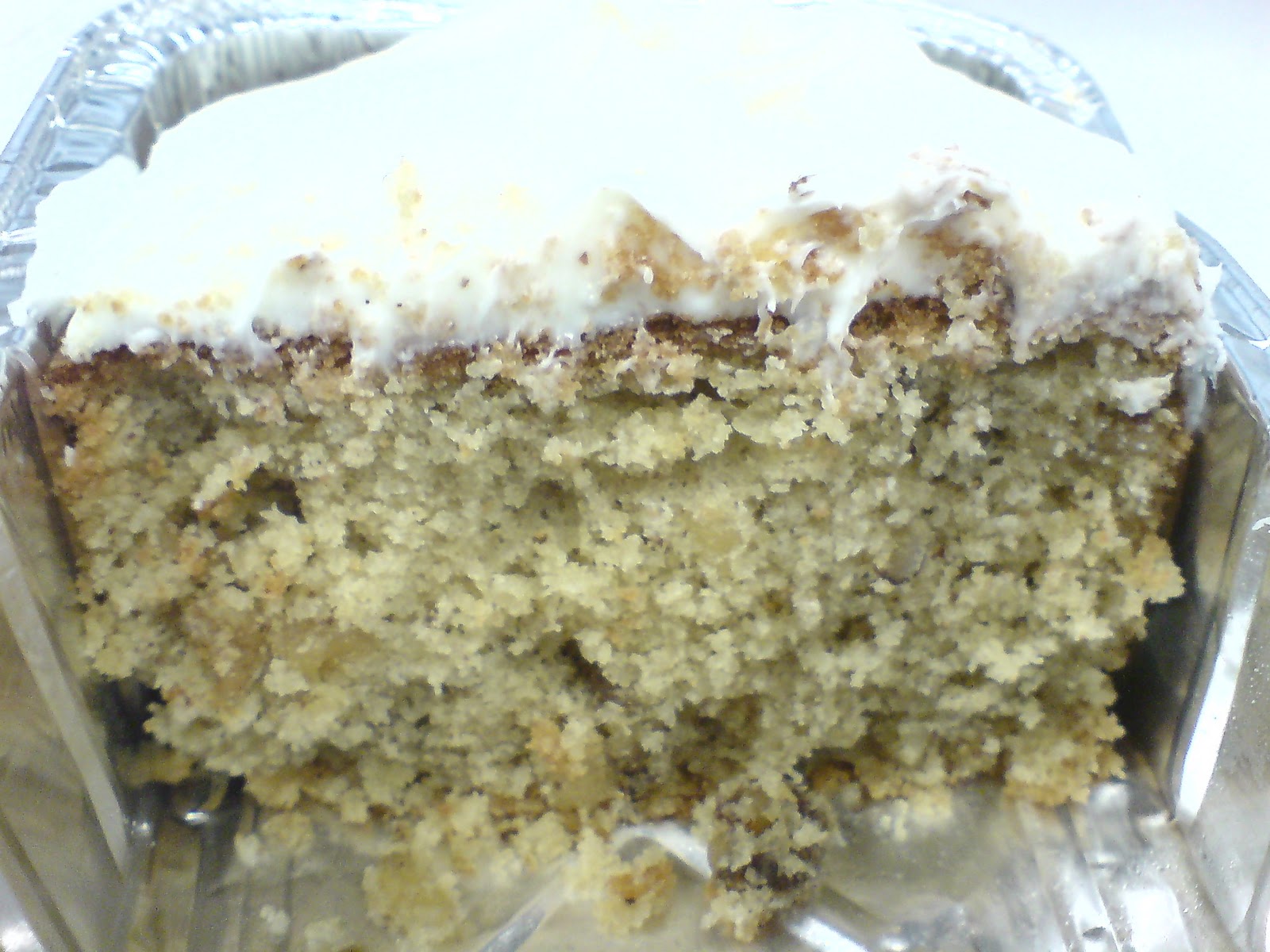
I needed to test out my oven’s baking capabilities so I thought I would go for a tried-and-tested pound cake. There are five pound cake recipes in English Food and this nut cake is the final one. They all have the same basic recipe, but this one being a nut cake, required two ounces of chopped nuts (I went for walnuts) as well as two tablespoons of strong coffee or rum (I went for coffee) extra. A pound cake needs icing and Griggers suggests making the one that is given for the walnut cake recipe from many moons ago. However, there is such an exciting selection of frostings available in American supermarkets that I had to try one. I bought a vanilla. Talking of vanilla, I got to test out the concentrated vanilla sugar from the last post and used half vanilla and half normal sugar.


#267 Nut Cake. This was a good cake – the vanilla sugar was very successful I thought. Although never the most exciting, pound cakes don’t disappoint either, so all was good. It was a bit dry, but I think I over-did mine a little, so it isn’t Griggers’ fault. 6.5/10.

#266 Concentrated Vanilla Sugar

Several recipes for cakes and other desserts require vanilla sugar. I have already made one of the two vanilla sugars in the book and this is the second. The best thing about this one is that not only is it concentrated, but it is also instant.

Whenever you are baking do try to use real vanilla pods, or at the very least the Madagascan vanilla extract. Don’t ever use the essence. If you do, I’ll come over to your house and smack your arse. Although Madagascar is the main producer of vanilla these days, it is actually a Mexican plant; an orchid in fact. Mexico had the monopoly on vanilla production because, although it is easy to grow the plants, fertilization of the flowers was only possible in Mexico itself. This is due to the symbiotic relationship between the vanilla plant and its pollinator; the Melipona bees of the area. It wasn’t until a 12 year-old slave discovered a way of artificially pollinating the flowers with a bamboo stick could vanilla farming leave Mexico. I wonder if the lad got a handsome reward. I doubt it….


Anyway, I have prattled on enough….


To make this vanilla sugar, cut two vanilla pods into one centimetre bits and put them into a blender along with four ounces of caster sugar. Whiz the mixture so that you get a grey-looking powder. Cut your vanilla sugar with eight ounces of caster sugar and keep it in an air-tight container. You’ll probably need to cut it further when you come to use it for recipes – this all depends on how much vanilla flavour you like. FYI it was thought of as an aphrodisiac, so don’t go crazy, unless you want your dinner party to turn into a scene from Eyes Wide Shut.


#266 Concentrated Vanilla Sugar. It’s hard to give this a mark really as it’s an ingredient rather than an actual food. We shall see when I come to use it in future recipes

#265 To Cook Salt Pork and Hams, Part II: to Eat Cold

Living in Texas means that there a lot of Mexican people (seeing as Texas was once part of Mexico, until the USA nicked it). Many Mexicans mean much pork is eaten. In England we eat loads of ham and bacon and sausage, but we’re not very exciting when it comes to other ways of eating it. Indeed this is reflected in English Food: there are just 8 pork recipes in the Meat chapter, yet there are loads of pork in the cured meat section. This is one of them of course – there is a whole variety of pork cuts that are familiar and unfamiliar to me. I saw a small leg and though it would be great to make my own salt pork seeing as I have the brine tub on the go at the moment. I have already done similar things from the book, like the Bradenham ham and the hot salt pork.
Noone seems to cure anything in England anymore – I can understand it of course, but brining meats is much more common here in the US – the Thanksgiving turkey got a good brining the night before from Joan last month. However if there is a cheap leg or loin going spare at the supermarket or butcher, it would be put to good use by being added to the brine tub rather than the freezer until it’s is needed.
You can use leg or loin for this. I have already gone through how to prepare and boil the salt pork or ham in a previous post. When it is cooked remove from the stock and allow it to drain and cool down enough for you to remove the skin without scolding yourself. If the meat has been deboned, then it needs to be wrapped in cling-film and pressed overnight (as I did). Toast some breadcrumbs and press them into the meat. This will be easier if the meat is still warm, though if you had to press it, there is no open than to do it when it is cold. Keep the whole thing wrapped up in clingfilm or greaseproof paper in the fridge and slice it up thinly for salads and sandwiches.
It’s important to remember that when you make these hams, you get a delicious ham stock. Use it to make some pea and ham soup (recipe here).
#265 To Cook Salt Pork and Hams, Part II: to Eat Cold. I think I must be getting better at these things because the salt pork was very moist and nicely salted. The trick seems to be to have the merest simmer when cooking it – in fact I turned the heat off completely for the final half hour; the cooking liquor was hot enough to continue to cooking process. I have been shaving bits of and eating it with mustard, pickles and sourdough bread. Very good! 7.5/10

#264 A Coronation Doucet

He was as ful of love and paramour
As is the hyve ful of hony sweete:
Wel was the wenche with hym myghte meete.
                             The Cook’s Tale, The Canterbury Tales
There are recipes in English Food that get me very excited indeed and this is one of the most exciting. This doucet – which means something sweet – is a custard tart that was served up at Henry IV’s coronation, alongside fritters, and candied quince (which I made quite a while ago, see here). Also on the banquet table were ‘curlews and partridges and quails and rabbits and small birds of many kinds’. Posh folk around this time would put pretty much anything into a sweet tart. It didn’t matter as long as there was sugar in it so they could show off how rich they were. A particular favorite was fish. Vile.
The Coronation of Henry IV
A custard tart may seem rather a plain dish, but remember this was October 1399 and this tart was laced with saffron and honey which were very prized ingredients. Indeed, it may have been sweetened with sugar too – which then would have cost a small fortune.
Henry IV spent most of his reign trying to prevent various plots against his own life – this was because the previous ruler, Richard II (some guy called Shakespeare wrote a play about him) went on a crusade and while he was away Henry began a military campaign to take Richard’s land and effectively earned the right to the crown. Richard wasn’t best pleased when he got back, but before he got the chance, he was thrown in the tower and starved to death. No curlews or partridges for old Dicky-boy. Henry IV also legalized the burning of heretics.  Read more on the lovely Henry here.
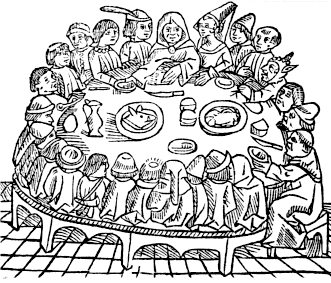
Canterbury Tales Woodcut, 1484
Not all was bad though. It was during this time that modern English was born. It was quite a strange thing – prior to these years all the texts were written in Latin and then, seemingly out of nowhere, English appeared all fully-formed. One of the key texts that shows this off is ‘The Canterbury Tales’ by Geoffrey Chaucer, who was present at the coronation. Also, Henry’s address was the first to be given in English. So this really was a key part of English history. This is why cooking food from this book can be so exciting – a chance to have a real glimpse into history. You can read books, go look at paintings, or walk around a magnificent cathedral, but EATING something that people once ate has some other connection; a personal connection that can only be achieved with food.
Anyways, I have wittered on enough. Time for the recipe…
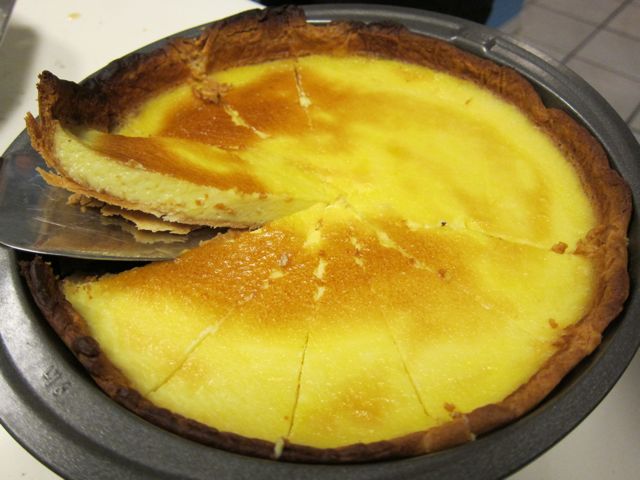
Blind bake some shortcrust pastry in a 9 inch tart tin – about 20 minutes at 180°C (350°F) should do it. Cover with baking parchment. Use baking beans to keep the pastry supported otherwise it will collapse and be a disaster. Remove the beans and paper for a final five minutes so that it can crisp up a little (at this point I lost track of time and slightly overdid mine, oopsey. Whilst it is baking, make the filling: In a saucepan bring 12 ounces of double cream and 3 ounces of Channel Island milk alongside a decent pinch of saffron and a tablespoon of either honey or sugar to a boil. It’s important to note that the creams are measured by weight, not fluid ounces. Whilst they are coming to a boil, beat together 2 eggs and 2 egg yolks in a bowl. When the creams boil, pour them over the eggs whisking as you go. Add more sugar/honey if you want – I added about three tablespoons of honey in all. Pour through a sieve into the blind-baked pastry case and bake at 180°C (350°F) until set – around 15-20 minutes.

The slightly over-done Coronation Doucet

#264 A Coronation Doucet. O! I loved cooking this. And I loved eating it too. It wasn’t even that nice; but the experience was so exciting. The custard was not very sweet, unlike what we are used to these days, but then in ye olden times there were no proper courses so sweet and savoury were not kept separate like nowadays. The saffron came across quite strongly too. I think if the sugar or honey was piled in, it wouldn’t have seemed out of place. This was the third recipe I did from the book for Thanksgiving, so I am not sure how my American chums found it (hopefully I will find out in the comments…). Scores? Hmmm, well probably a 4/10 for actual flavour, 10/10 for geeky excitement